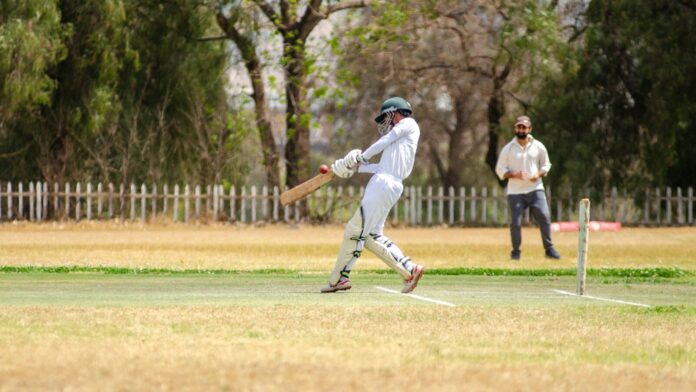

Cricket looks gentle from the boundary rope, but your body knows better. A quick single, a dive at cover, a hard throw from the deep and a six-over spell can all arrive inside ten minutes, after an hour of standing still. After 35, that stop-start pattern is what pulls hamstrings, strains sides and stiffens backs, and the right training prevents much of it.
Key takeaways
- Cricket fitness is mostly about repeated sprints, fast changes of direction and, for bowlers, absorbing big forces through the trunk and back.
- Hamstring strains are the most common injury in elite cricket, and older age and a previous hamstring injury are two of the strongest risk factors.
- Fast bowlers carry the highest injury burden, with low back stress fractures causing the most missed playing time.
- Nordic hamstring curls, trunk strength and a proper warm-up are your best-value injury insurance.
- Build bowling volume gradually. Big jumps in overs from one week to the next are linked with injury, whatever ratio you use to track it.
What cricket actually demands from your body
Cricket is an intermittent sport. Long periods of low activity are broken by short, maximal efforts. GPS research on Australian cricketers found that fast bowlers sprinted about twice as often as other positions and covered more than three times the sprint distance. In multi-day matches they covered roughly 22 km a day, around 1.4 km of it at sprint speed.
The same study showed that one-day and T20 games involve about 50 to 100 percent more sprinting per hour than longer formats. So the short formats most club players love are, minute for minute, the most demanding.
The three main jobs
- Batting: repeated sprints of roughly 18–20 m between wickets, often turning hard at the crease, plus explosive rotation through the trunk when you hit.
- Fielding: sudden accelerations from a standing start, diving, getting up quickly and throwing hard, usually without warning.
- Fast bowling: a run-up, a jump, and a front-foot landing that loads the knee, hip and lower back, combined with fast trunk rotation and side flexion. Repeat it six times an over.
None of that needs marathon fitness. It needs speed, strength, a robust trunk and enough aerobic base to recover in the heat.
The injuries that sideline cricketers
Cricket has excellent injury surveillance, though most data come from elite men. Treat the numbers as a guide to patterns, not your personal risk.
Hamstring strains
A decade of Cricket Australia surveillance found hamstring strain was the most common injury in elite men’s cricket, at about 8.7 injuries per 100 players per season. A six-season New Zealand study also ranked hamstring strains as the most common single diagnosis, and found the lower limb was the most injured body region.
Age matters here. A 2020 meta-analysis of more than 71,000 athletes found older age and a history of hamstring injury were the strongest risk factors. A previous hamstring strain was linked with roughly 2.7 times the risk of another. If you are over 35 and have pulled one before, prevention is not optional.
Side and abdominal strains
“Side strain” is the cricket name for a tear in the muscles of the lateral abdominal wall, most often the internal oblique. Australian data covering 20 years found pace bowlers were about ten times more likely to suffer these injuries than other players. They also peaked early in the season, when bowling loads tend to rise quickly after the break.
Lower back injuries in bowlers
Low back stress fractures are the most costly injury in the game. In the Australian data they were the most prevalent injury, accounting for about 15 percent of all missed playing time. In New Zealand, low back stress fractures caused the largest share of match days lost. Fast bowlers had injury prevalence of about 20.6 percent, well above the average of 12.5 percent for all players. Older club bowlers are less studied, but the same bending, twisting and landing forces load your back every spell.
Shoulder injuries in throwers
Shoulder problems often do not stop you playing, so surveillance that only counts missed matches undercounts them. Research in elite South African cricketers found widespread rotator cuff and shoulder blade weakness and lost internal rotation in the throwing shoulder. Amateurs in the same work showed higher shoulder forces when throwing than elite players.
Your weekly cricket fitness plan
This plan assumes one weekend match and three to four hours of training a week. If you also play midweek T20, count it as your speed session. Coming back after years away? Start with our strength training after 35 guide and build a base before adding sprints.
| Day | In-season (Saturday match) | Off-season |
|---|---|---|
| Monday | Recovery: 20–30 min easy walk or bike, mobility | Strength A: squat or trap-bar deadlift, Nordic curls, split squats, Pallof press (45–60 min) |
| Tuesday | Strength A (lighter): trap-bar deadlift, Nordic curls, single-leg work, side planks (40 min) | Zone 2 cardio, 40–50 min |
| Wednesday | Nets or skills plus 6–8 short sprints of 10–20 m with full rest | Speed: 8–10 acceleration sprints, change-of-direction drills, low hops |
| Thursday | Strength B (short): upper body pulling, rotator cuff work, med-ball throws, trunk (30–40 min) | Strength B: press, rows, rotator cuff, med-ball rotational throws, Copenhagen side planks |
| Friday | Rest or 20 min mobility; hydrate and sleep well | Zone 2 or easy mixed session, 30–40 min |
| Saturday | Match day: full warm-up, refuel at breaks | Longer zone 2 session or a different sport |
| Sunday | Rest or second match (see back-to-back section) | Rest |
How to use the plan
- Strength in season is maintenance. Keep the weights fairly heavy but cut sets by about a third, and finish at least 48 hours before a match.
- Nordic hamstring curls are the anchor. A 2019 meta-analysis of 8,459 athletes found programmes including Nordics cut hamstring injury rates by up to about half. Start with 2 sets of 4–5 slow reps, kneeling on a pad with a partner or a fixed bar holding your heels.
- Train the trunk for rotation and side bending, not just crunches. Side planks, Pallof presses and controlled med-ball throws match what bowling and batting ask of you.
- Use the off-season to build the engine. Two easy aerobic sessions a week help you recover between sprints. Our zone 2 training guide explains how to pace them.
A 15-minute pre-match warm-up
A few throws and a stretch is not enough before maximal sprinting. Structured warm-ups that build from jogging to sprinting have good evidence in other field sports, and the principles fit cricket.
- Raise (3 minutes): easy jogging around the outfield, side-steps and backward jogging.
- Mobilise (3 minutes): leg swings, walking lunges with a twist, hip openers, arm circles and thoracic rotations.
- Activate (3 minutes): glute bridges, 5 slow Nordic lowers or single-leg bridges, side plank for 20 seconds each side, band external rotations for the shoulder.
- Potentiate (4 minutes): 3–4 sprints building from 60 to 90 percent effort, two quick turns as if running between wickets, and a couple of short reactions to a ball rolled by a teammate.
- Skill (2 minutes): throws building from short to long, and bowlers run through a few deliveries at increasing pace.
Bowling workload: build up, never jump
The best-known cricket workload study followed 28 elite fast bowlers over six years. The researchers compared each bowler’s workload in the current week with his average over the previous four weeks. When the one-week load was more than double the four-week average, injury risk in the following week was about 3 to 4.5 times higher than in weeks when it was 50–99 percent of the four-week average. This became known as the acute:chronic workload ratio.
A separate 15-year study of 235 fast bowlers found that bowling more than 50 match overs in five days was linked with about a 50 percent higher injury risk over the next month.
The caveats
The ratio has been strongly criticised. A 2020 analysis in Sports Medicine argued it adds little beyond tracking acute load alone and can create statistical artefacts. It also comes from elite players with full-time support staff. Do not treat any number as a precise injury threshold.
The practical message survives the debate: sudden spikes in bowling are the problem. For a club bowler that means:
- Bowl in the nets for 3–6 weeks before the season, starting with short spells and building each week.
- Count balls bowled in nets and matches. Avoid weeks that are more than about double your recent average.
- Be most careful early in the season and when switching from T20 to longer formats, the times when side strains and back problems tend to appear.
- If you come back from a break, rebuild the volume rather than picking up where you left off.
Recovering between back-to-back match days
A Saturday and Sunday double-header is common in club cricket. The research above suggests that heavy bowling across consecutive days adds up, so plan the weekend as one block.
- Refuel within an hour of stumps: a meal with carbohydrate and 25–40 g of protein, such as dal with rice, paneer or tofu wraps, or eggs on toast with yoghurt.
- Rehydrate before bed and check your urine is pale the next morning.
- Prioritise sleep. It is your most powerful recovery tool. See our guide to sleeping better after 35.
- Move gently on day two: a short walk and mobility routine loosens stiff hamstrings and backs.
Heat and hydration on match day
Many club games are played for five to seven hours in the sun, and fielders and bowlers sweat heavily. The American College of Sports Medicine position stand advises preventing fluid losses greater than 2 percent of body weight and starting to drink several hours before exercise.
- Drink with breakfast and again 1–2 hours before the start.
- Take drinks at every break, not only when you feel thirsty.
- On hot days, add sodium through an electrolyte drink or salty snacks, especially if you see salt marks on your cap.
Our hydration and electrolytes guide covers how much you need in detail.
Know the warning signs. The NHS lists headache, dizziness, nausea, cramps, heavy sweating and intense thirst as signs of heat exhaustion. Move to shade, cool down and drink. A player who is confused, has stopped sweating or does not improve within 30 minutes may have heatstroke, which is an emergency.
Safety note: If you feel chest pain, unusual breathlessness, palpitations or faintness during play, stop and get checked before you play again. Back pain in a bowler that is worse when bowling or arching backwards and lasts more than a week or two needs a physiotherapist or sports doctor, because stress fractures need proper diagnosis. Return from any hamstring or side strain gradually, with a guided rehab plan, not straight into match sprinting.
FAQ
How can I stop pulling my hamstring when running between wickets?
Add Nordic curls twice a week, include sprints in training so match running is not a shock, and warm up with build-up runs before you bat. If you have had a hamstring strain before, these steps matter even more, because a previous injury is one of the strongest risk factors.
Is gym training bad for cricket at my age?
No. It is one of the best ways to reduce injury risk and keep your speed. Keep in-season sessions short and at least two days before a match.
How many overs should a club fast bowler bowl in a week?
There is no safe number that fits everyone. Build up gradually in pre-season, track balls bowled, and avoid suddenly doubling your recent weekly load. Bowlers who have not bowled for months should rebuild over several weeks.
Do I need to run long distances for cricket fitness?
Not really. Short sprints, change-of-direction work and a couple of easy aerobic sessions a week match the demands better than long runs. Aerobic fitness still helps you recover between efforts and cope with heat.
What should I eat on match day?
Have a carbohydrate-based breakfast, snack at drinks breaks, eat a normal lunch at the interval and refuel after play. Vegetarian options such as poha, idli, rice and dal, or sandwiches with paneer or hummus work well.
Free cricket tools: build your season prep with the cricket preseason planner, log your overs with the bowling workload tracker, and plan match-day fluids with the hydration calculator.
Sources
- Orchard JW, Kountouris A, Sims K. Incidence and prevalence of elite male cricket injuries using updated consensus definitions. Open Access J Sports Med, 2016.
- Frost WL, Chalmers DJ. Injury in elite New Zealand cricketers 2002–2008: descriptive epidemiology. Br J Sports Med, 2014.
- Humphries D, Orchard J, Kountouris A. Abdominal wall injuries at the elite level in Australian male professional cricketers.
- Petersen CJ et al. Movement patterns in cricket vary by both position and game format. J Sports Sci, 2010.
- Green B et al. Recalibrating the risk of hamstring strain injury: a 2020 systematic review and meta-analysis. Br J Sports Med, 2020.
- van Dyk N, Behan FP, Whiteley R. Including the Nordic hamstring exercise in injury prevention programmes halves the rate of hamstring injuries. Br J Sports Med, 2019.
- Hulin BT et al. Spikes in acute workload are associated with increased injury risk in elite cricket fast bowlers. Br J Sports Med, 2014.
- Orchard JW et al. Fast bowling match workloads over 5–26 days and risk of injury in the following month. J Sci Med Sport, 2015.
- Impellizzeri FM et al. What role do chronic workloads play in the acute to chronic workload ratio? Sports Med, 2020.
- Dutton MC. The cricketing shoulder: biomechanics and analysis of potential injury risk factors in elite cricketers. University of Cape Town, 2019.
- American College of Sports Medicine. Position stand: Exercise and fluid replacement. Med Sci Sports Exerc, 2007.
- NHS. Heat exhaustion and heatstroke.
This article is for general education and is not medical advice. Check with your doctor before starting a new training or nutrition plan, especially if you have a health condition.

