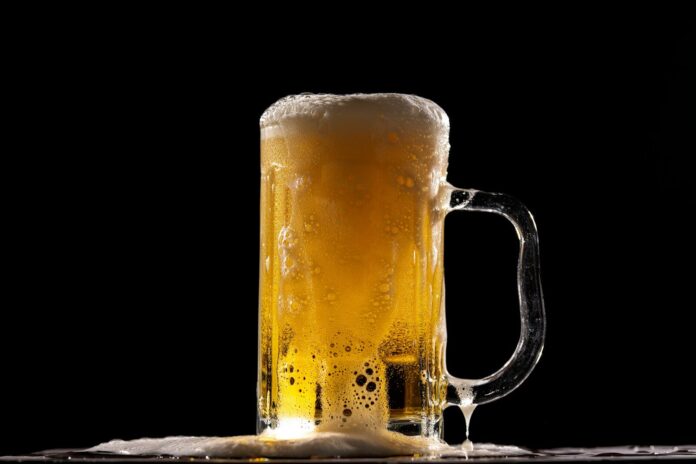

Alcohol and fitness after 35 mix worse than most men think. Heavy drinking after training cut muscle building by 24–37% in a lab study, even a couple of drinks measurably reduce how well your body recovers overnight, and every pint adds around 220 kcal. You do not have to quit to stay fit, but the less you drink, the better you will train, sleep and lose fat.
Key takeaways
- A big drinking session after training reduced muscle protein synthesis by 24% even when protein was taken alongside it, and by 37% without protein.
- In data from more than 4,000 people, low, moderate and high alcohol intake cut overnight physiological recovery by about 9%, 24% and 39%.
- Alcohol helps you fall asleep faster but disrupts the second half of the night.
- Alcohol carries 7 kcal per gram, and the body burns it before fat. A typical “weekend social” week can add 1,500+ kcal.
- Guidelines differ by country: UK 14 units a week, Australia 10 standard drinks, Canada 2 or fewer drinks a week for low risk. The WHO says no level is risk-free.
What does alcohol do to muscle growth?
The best-known study comes from Australia. In a randomised crossover trial published in PLoS One in 2014, eight physically active men did a tough session of leg extensions, steady cycling and intervals. Afterwards they had either protein, alcohol plus the same protein, or alcohol plus carbohydrate.
The alcohol dose was large: 1.5 g per kg of body weight, roughly 12 standard drinks spread over the recovery period. Compared with protein alone, muscle protein synthesis was 24% lower when alcohol was added to protein and 37% lower when alcohol replaced it.
What that means for you
- It was a binge, not a beer. The study does not show that one drink ruins a workout. It does show that a big night after training blunts the response you trained for.
- Protein helped but did not fix it. Eating protein softened the hit; it did not cancel it.
- It was one session. Nobody has shown exactly how this adds up over months. Still, if heavy nights regularly follow your training days, you are giving away results.
After 35, your muscles already respond a little less to each meal and session. Our guide to strength training after 35 shows how to make every session count.
How does alcohol affect sleep and recovery?
It knocks you out, then wakes you up
A review of 20 studies in healthy volunteers, published in Alcoholism: Clinical and Experimental Research, found that alcohol helps you fall asleep faster at all doses and increases deep sleep in the first half of the night. Then the second half becomes more disrupted.
Alcohol also delays the first period of REM sleep at all doses and, at moderate and high doses, reduces total REM sleep in most studies. The authors’ conclusion was blunt: alcohol does not improve a full night’s sleep and should not be used as a sleep aid.
It cuts your overnight recovery
Finnish researchers used heart rate variability (HRV) data from 4,098 adults aged 18–65, each recorded on nights with and without alcohol. In the first three hours of sleep, physiological recovery fell by 9.3% after low intake, 24% after moderate intake and 39.2% after high intake. For an average person, those bands roughly matched 1–2, 2–6 and more than 6 drinks.
This was an observational study, but it matches what many men see on their own watch the morning after. Our HRV guide explains what those numbers mean, and our sleep guide covers better ways to wind down.
Does alcohol stop fat loss?
Not by itself, but it makes fat loss harder in three ways.
1. The calories are easy to miss
Alcohol carries about 7 kcal per gram, almost as much as fat (9 kcal). Alcohol Change UK estimates about 222 kcal for a pint of 5.2% beer and 158 kcal for a 175 ml glass of 12% wine. A UK unit is 8 g of pure alcohol, about 56 kcal before any sugar or mixers.
2. Your body burns alcohol first
In a study of healthy men given 24 g of alcohol (about three UK units), the liver converted most of it to acetate, which went into the blood. That acetate suppressed the release of fat from fat stores and shifted the body’s fuel use towards burning acetate instead. Your fat burning is effectively on pause while you process the drink.
3. It changes what you eat
Alcohol Change UK notes that alcohol stimulates appetite, which can lead to overeating at mealtimes and late at night. Add a short, broken night of sleep and the next day’s cravings, and the true cost of a night out is much more than the drinks.
If belly fat is your main concern, read our guide to belly fat after 35, where cutting alcohol is one of the five levers.
Your typical week: how much are you really drinking?
This table uses Alcohol Change UK’s estimates for common drinks. Grams of alcohol let you compare with guidelines anywhere: a UK unit is 8 g and an Australian standard drink is 10 g.
| Your typical week | UK units | Alcohol | Calories |
|---|---|---|---|
| 2 pints of beer on Saturday | 6 | 48 g | about 440 |
| 175 ml glass of wine with dinner, 4 nights | 8.4 | 67 g | about 630 |
| 2 pints midweek + 3 double spirits on Saturday | 12 | 96 g | about 740 + mixers |
| Large 250 ml glass of wine every night | 21 | 168 g | about 1,575 |
| 4 pints on Friday + 4 pints on Saturday | 24 | 192 g | about 1,775 |
The last two rows are common and both well above every national guideline below. At about 1,775 kcal, the “weekend social” week can cancel out a sensible daily deficit for much of the week.
How much alcohol is safe? What the guidelines say
| Country or body | Advice for men |
|---|---|
| UK (NHS / Chief Medical Officers) | No more than 14 units (112 g) a week, spread over 3 or more days |
| Australia (NHMRC) | No more than 10 standard drinks (100 g) a week and no more than 4 on any day |
| Canada (CCSA, 2023) | 1–2 drinks a week is low risk, 3–6 moderate, 7+ increasingly high; no more than 2 on any day |
| United States (USDA/HHS Dietary Guidelines 2025–2030) | No numeric limit; “consume less alcohol for better overall health” (earlier guidelines said up to 2 drinks a day for men) |
| World Health Organization (2023) | No level of drinking is safe for health; risk starts with the first drink |
The WHO statement, published in The Lancet Public Health, notes that alcohol causes at least seven types of cancer and that about half of alcohol-attributable cancers in the WHO European Region come from light and moderate drinking. Guidelines are about reducing risk, not making drinking risk-free.
Alcohol and fitness: how to drink smarter if you train
If you choose to drink, these habits limit the damage to your training, sleep and waistline.
- Keep drinks off your key training days. Plan heavier evenings for rest days, not straight after a big lifting session.
- Eat protein first. A proper meal with 25–40 g of protein (chicken, fish, eggs, Greek yoghurt, paneer, tofu or lentils) before or with drinks protects better than nothing, though it does not fully cancel the effect.
- Set your number before you start. Decide on two or three drinks and stop there; drinking in rounds makes that harder.
- Alternate with water or alcohol-free beer. The NHS suggests water between drinks and adding soda water to wine.
- Have several drink-free days each week. The UK guidance is to spread drinking over three or more days rather than saving it up.
- Finish well before bed. The less alcohol on board when you fall asleep, the less it can disturb the second half of your night.
- Train the next day anyway, but go easier. A walk or light session beats skipping; save heavy lifts for when you have slept properly. Our guide to sleep for building muscle explains why that night matters.
Many men find that a stressful week is what drives the drinking. If that sounds familiar, our guide to chronic stress recovery has other ways to switch off.
Safety note: Talk to your doctor if you regularly drink more than the guidelines, feel you should cut down but cannot, need a drink to feel normal, or get shaky, sweaty or anxious when you stop. If you drink heavily every day, do not stop suddenly without medical advice, because withdrawal can be dangerous. Alcohol interacts with many medicines, including some for sleep, pain, blood pressure and mood, so check with your doctor or pharmacist.
FAQ
Does one beer after a workout ruin your gains?
Very unlikely. The 24–37% drop in muscle building came from about 12 standard drinks after training. One beer with a protein-rich meal is a minor issue; regular heavy sessions after training are the real problem.
How long after drinking should I wait to work out?
Wait until you have slept, rehydrated and feel normal, which usually means the next day. Training while alcohol is still in your system is unsafe, especially with heavy weights or in the heat. Keep the first session after a big night light.
Is beer or wine worse for fitness?
The alcohol matters more than the drink. Per drink, a pint of beer and a large glass of wine carry similar units and calories. Spirits with zero-calorie mixers have fewer calories, but the effects on muscle and sleep are the same.
Is it better to drink on a rest day than a training day?
Yes. The muscle-building hit in the lab study came from drinking straight after training, so rest days are the smarter choice. Drinking still disrupts that night’s sleep and recovery, though, so keep it moderate whichever day you choose.
Can I lose weight and still drink alcohol?
Yes, if you count drinks as part of your calories and keep them modest. Most men find that cutting weekly drinks by a third or more is one of the easiest ways to create a deficit without feeling hungry.
Free tool: enter your usual week in the alcohol calculator to see your units, calories and how you compare with the guidelines, then plan better nights with the sleep calculator.
Sources
- Parr EB et al. Alcohol ingestion impairs maximal post-exercise rates of myofibrillar protein synthesis following a single bout of concurrent training. PLoS One, 2014.
- ScienceDaily. Reviewing alcohol’s effects on normal sleep (Ebrahim IO et al. Alcohol Clin Exp Res, 2013).
- Firstbeat. Alcohol intake and sleep quality using real-world data (Pietilä J et al. JMIR Mental Health, 2018).
- Siler SQ, Neese RA, Hellerstein MK. De novo lipogenesis, lipid kinetics, and whole-body lipid balances in humans after acute alcohol consumption. Am J Clin Nutr, 1999.
- Alcohol Change UK. Alcohol and calories.
- NHS. Calories in alcohol.
- NHMRC. Australian guidelines to reduce health risks from drinking alcohol.
- Canadian Centre on Substance Use and Addiction. Canada’s Guidance on Alcohol and Health, 2023.
- US Department of Agriculture and Department of Health and Human Services. Dietary Guidelines for Americans, 2025–2030 (Limit alcoholic beverages).
- World Health Organization. No level of alcohol consumption is safe for our health. Lancet Public Health, 2023 (via HRB National Drugs Library).
This article is for general education and is not medical advice. Check with your doctor before starting a new training or nutrition plan, especially if you have a health condition.

