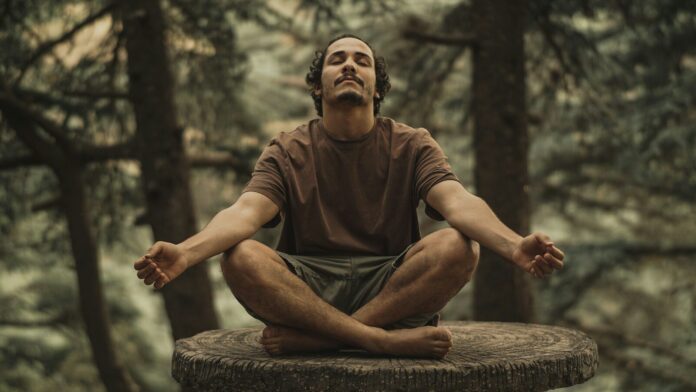

Yes, breathing exercises for stress work, but the effect is modest and the technique matters less than the pace. A 2023 meta-analysis of 12 randomised trials found breathwork lowered self-reported stress by a small-to-medium amount, and in a month-long Stanford trial just 5 minutes a day of slow, exhale-led breathing lifted mood more than mindfulness meditation did. The common thread is simple: breathe slower than usual, with a long, relaxed out-breath.
Key takeaways
- Across 12 randomised trials and 785 adults, breathwork reduced stress with a small-to-medium effect. It also eased anxiety and low mood a little.
- Slow breathing, under about 10 breaths a minute and often around 6, is the best-studied approach. It raises heart rate variability and promotes relaxation.
- In a 2023 trial, cyclic sighing (two inhales, one long exhale) for 5 minutes a day gave the biggest boost in positive mood of the techniques tested.
- Box breathing and 4-7-8 are fine options, but there is less direct evidence for them than for slow-paced breathing.
- Breathing is a tool for everyday stress, not a treatment for anxiety disorders or depression. Fast, forceful breathwork carries more risk and has less evidence.
Why your breath changes how stressed you feel
Breathing is the one part of your stress response you can steer on purpose. Your heart rate rises a little when you breathe in and falls when you breathe out. This rhythm is called respiratory sinus arrhythmia, and it is one reason a long exhale feels calming.
When you slow your breathing right down, that rhythm gets bigger. A systematic review of 15 studies in healthy adults found that breathing under 10 breaths a minute increased heart rate variability (HRV) and respiratory sinus arrhythmia. It also shifted brain activity towards more alpha waves, a pattern linked with calm alertness. People reported feeling more relaxed, comfortable and alert, with less anxiety, anger and confusion.
That review had real limits. Many studies were small, and techniques varied a lot. But the direction was consistent: slow breathing nudges your body away from fight-or-flight. If you track HRV on a watch, our guide to what your HRV means explains why slow breathing is one of the habits that moves it.
What the research shows, in numbers
The 2023 meta-analysis
Researchers at the University of Sussex pooled 12 randomised controlled trials with 785 adults. Breathwork lowered self-reported stress compared with control groups. The effect size (Hedges g of about 0.35) is what statisticians call small to medium. In everyday terms, it helps, but it is not a magic switch.
The same review found smaller benefits for anxiety (20 studies) and low mood (18 studies). Ten of the 12 stress trials used slow breathing. Only two used fast breathing, too few to judge.
The authors were cautious. Most trials had a moderate risk of bias, and the benefits were not clear in groups with diagnosed mental or physical health conditions. They warned against hype that runs ahead of the evidence.
The Stanford cyclic sighing trial
This 2023 trial in Cell Reports Medicine asked volunteers to practise for 5 minutes a day for 28 days. About 110 adults finished. They were randomly assigned to one of four practices:
- Cyclic sighing: two inhales through the nose, then a long, slow exhale through the mouth.
- Box breathing: inhale, hold, exhale and hold for equal counts.
- Cyclic hyperventilation: 30 deep, fast breaths followed by a 15-second hold, repeated three times.
- Mindfulness meditation: the comparison group.
All three breathing practices improved daily positive mood. Cyclic sighing gave the biggest gain, and it was the only one that clearly beat meditation on mood and on lowering resting breathing rate. Anxiety fell in every group, including meditation, with no real difference between them. HRV and resting heart rate did not change.
Keep the context in mind. Most participants were young, healthy university students, practice was done at home and self-reported, and the study lasted only four weeks. It is promising, not final.
Slow breathing with biofeedback
HRV biofeedback trains you to breathe at the slow pace where your heart rhythm swings the most, often near six breaths a minute. A 2020 meta-analysis of 58 randomised studies found a small-to-moderate benefit overall. The biggest effects were for anxiety, low mood, anger and athletic and artistic performance. The authors called it a complementary treatment that needs more research for specific uses.
Breathing techniques compared
Here is how the popular methods stack up. “Evidence” refers to direct studies of each technique, not claims made for it online.
| Technique | How to do it | Best for | Evidence |
|---|---|---|---|
| Cyclic sighing | Inhale through the nose, take a second short sip of air on top, then exhale slowly through the mouth until empty | A fast reset before a meeting, a call or bed | Moderate: one good RCT, largest mood gain of the methods tested |
| Slow breathing (about 6 a minute) | Breathe in for about 4–5 seconds and out for about 5–6 seconds | Daily practice, winding down, HRV | Strongest: the main approach in most trials and reviews |
| NHS belly breathing | In through the nose, out through the mouth, counting 1 to 5 each way, for at least 5 minutes | Beginners who want a simple count | Good: a slow-breathing method backed by public health guidance |
| Box breathing | Inhale 4, hold 4, exhale 4, hold 4 | Focus under pressure, people who like structure | Some: improved mood in the Stanford trial, but less than cyclic sighing |
| 4-7-8 breathing | Inhale 4, hold 7, exhale 8 | Winding down at night | Limited: small studies, mostly in patient groups |
| Fast breathwork with breath holds | Rounds of rapid deep breaths followed by a hold | Not a first choice for stress | Mixed: improved mood in one trial, but too few studies and more side effects |
A small 2025 lab study compared box breathing, 4-7-8 and breathing at six breaths a minute. The six-a-minute pace raised HRV measures the most. It fits the wider pattern: the slow pace seems to do most of the work.
Myth vs evidence
| Myth | What the evidence says |
|---|---|
| “One special technique is far better than the rest.” | Slow, exhale-led breathing is the common thread. Cyclic sighing edged out the others in one trial, but the differences were small. |
| “You need 20–30 minutes for it to work.” | Five minutes a day for a month improved mood in the Stanford trial. The NHS suggests at least 5 minutes. |
| “Breathing exercises cure anxiety.” | They ease everyday stress and anxiety symptoms a little. They are not a replacement for treatment of an anxiety disorder or depression. |
| “Breathing harder and faster is more powerful.” | Fast breathwork has fewer trials and more reported side effects, such as light-headedness and shortness of breath. |
| “It must raise your HRV to count.” | In the Stanford trial mood improved even though resting HRV did not change. |
The 2-minute stress reset test
You do not need a lab to see whether this works for you. Try this today:
- Rate your tension from 0 (calm) to 10 (wound tight). Write the number down.
- Do 2 minutes of cyclic sighing. Sit or stand. Inhale through your nose, top it up with a short second inhale, then let the air out slowly through your mouth. Repeat at an easy pace.
- Rate your tension again. A drop of 1–2 points is a good result.
Repeat the test for a week, at different times of day. You will learn when breathing helps you most: before a hard conversation, after the school run or at your desk at 3 pm. If you would like a guide to follow, our free guided breathing exercise paces each breath for you.
A simple 5-minute daily plan
Consistency beats intensity. The trials that showed benefits asked people to practise most days for weeks. Here is a realistic routine for a busy week.
| When | What | Time |
|---|---|---|
| Morning, after coffee or before email | Slow breathing: in for 4, out for 6 | 5 minutes |
| Before a stressful moment | Cyclic sighing, 3–5 breaths | 30–60 seconds |
| After training | Lie on your back, hands on your belly, slow breathing | 2–3 minutes |
| Bedtime | NHS belly breathing or 4-7-8 if you like it | 5 minutes |
Tips that make it stick
- Attach it to a habit you already have, such as your morning coffee, parking the car or brushing your teeth.
- Breathe into your belly. Your stomach should move more than your chest. Do not force it.
- Do not chase big numbers. If a count of 5 feels like a strain, use 3 or 4. The NHS notes you may not reach 5 at first.
- Pair it with movement. Breathing is a quick fix. Regular exercise has a bigger, longer-lasting effect on mood, as we cover in exercise for stress and mood.
- Like it? Go further. Breath focus is also the easiest way into a 10-minute meditation habit.
Where breathing fits in your stress toolkit
Think of breathing as a fast, free tool you can use anywhere: in a car park, a meeting room or the shower. It works in minutes, which is something exercise and sleep cannot do.
But it treats the symptom, not the cause. If stress has been building for months, look at the bigger levers too: sleep, workload, alcohol, training load and time with friends. Our guide to recovering from chronic stress walks through them. Poor sleep makes everything harder, so a short breathing routine at night is a good bridge to sleeping better after 35.
A note for women: the trials above included both women and men, and there is no sign that these techniques work differently by sex. If hot flushes or night sweats around perimenopause are disturbing your sleep, slow breathing at bedtime may help you relax, but talk to your doctor about the symptoms themselves.
Safety note: Stop if you feel dizzy, tingly or short of breath, and return to normal breathing. Never practise breath holds or fast breathwork in or near water, while driving or while standing somewhere you could fall. If you have a heart or lung condition, epilepsy, are pregnant or have a history of panic attacks, check with your doctor before trying fast breathing or long breath holds. Slow, gentle breathing is low risk for most people.
Need to talk to someone now? If you are struggling or having thoughts of harming yourself, contact a helpline or emergency services. You do not have to be in immediate danger to call.
- US: call or text 988 (Suicide & Crisis Lifeline).
- UK & Ireland: Samaritans, 116 123, free and 24 hours.
- Canada: call or text 988.
- Australia: Lifeline, 13 11 14.
- India: Tele-MANAS, 14416.
- Colombia: Línea 106.
- Elsewhere: find a free helpline at findahelpline.com.
FAQ
What is the best breathing exercise for stress?
Slow breathing with a longer exhale has the most evidence. Cyclic sighing, two inhales and one long exhale, gave the biggest mood boost in a 2023 trial and is easy to remember. Pick the one you will actually do.
How long do breathing exercises take to work?
Many people feel calmer within a few minutes. For lasting benefits, the research points to practising about 5 minutes on most days for several weeks.
Is box breathing good for anxiety?
It can help you feel calmer and more focused, and it improved mood in the Stanford trial. If you have an anxiety disorder or panic attacks, use it alongside professional treatment, not instead of it.
Do breathing exercises lower blood pressure?
Slow breathing calms your nervous system in the moment, but it is not a substitute for proven measures. Our guide on lowering blood pressure naturally covers the habits with the strongest evidence.
Is Wim Hof style breathing safe?
Fast breathing with breath holds has much less research for stress and more reported side effects. Never do it in water or while driving, and check with your doctor first if you have a health condition.
Free tool: try a guided 1–5 minute reset with our breathing exercise, then see how today’s habits shape your health in 10 years with Future You.
Sources
- Fincham GW, et al. Effect of breathwork on stress and mental health: a meta-analysis of randomised-controlled trials. Scientific Reports, 2023.
- Balban MY, et al. Brief structured respiration practices enhance mood and reduce physiological arousal. Cell Reports Medicine, 2023.
- Zaccaro A, et al. How breath-control can change your life: a systematic review on psycho-physiological correlates of slow breathing. Frontiers in Human Neuroscience, 2018.
- Lehrer P, et al. Heart rate variability biofeedback improves emotional and physical health and performance: a systematic review and meta analysis. Applied Psychophysiology and Biofeedback, 2020.
- Marchant et al. Comparing the effects of square, 4-7-8, and 6 breaths-per-minute breathing conditions on heart rate variability, CO2 levels, and mood. Applied Psychophysiology and Biofeedback, 2025.
- NHS. Breathing exercises for stress.
- Mayo Clinic. Relaxation techniques: try these steps to lower stress.
This article is for general education and is not medical advice. Check with your doctor before starting a new training or nutrition plan, especially if you have a health condition.

