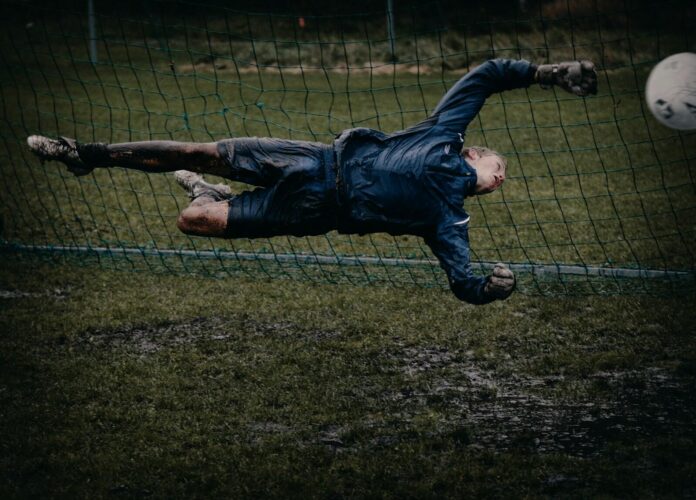

Your reflexes slow far less with age than most people assume. In a carefully calibrated study of 1,469 adults, average simple reaction time crept from about 218 milliseconds at ages 18–24 to about 228 ms at 39–45 and 239 ms at 59–65, roughly half a millisecond a year. The things that make you slow on a given day, like a short night or a long one awake, cost you far more than your birthdays do.
Key takeaways
- Simple reaction time slows by only about 0.5 ms a year: around 10 ms between your mid-20s and mid-40s in the most precise large study.
- Choice reaction time (deciding which way to go) slows more steadily through adulthood than simple reaction time does.
- The part of your brain that spots the signal barely ages. Most of the slowdown is in starting the movement, which is something training can target.
- Online tests usually read 30–100 ms slower than lab tests because of screen and device lag, so compare yourself only with yourself, on the same device.
- Two weeks of 6-hour nights, or 17–19 hours awake, can impair you far more than a decade of ageing. Sleep, regular exercise and fast, reactive training are the real levers.
Reaction time by age: the numbers
Reaction time studies disagree wildly on the raw numbers, partly because of the equipment they used (more on that below). The study with the tightest measurement comes from a team at the University of California and the US Veterans Affairs system. They tested 1,469 adults aged 18 to 65 with a calibrated screen, a gaming mouse and 120 trials each, then replicated the results in a second group aged up to 82.
Here is what they found for simple visual reaction time, where you press a button as soon as a target appears.
| Age group | Average simple reaction time | Slower than age 18–24 by |
|---|---|---|
| 18–24 | 218 ms | — |
| 25–31 | 221 ms | about 3 ms |
| 32–38 | 225 ms | about 7 ms |
| 39–45 | 228 ms | about 10 ms |
| 46–51 | 234 ms | about 16 ms |
| 51–58 | 236 ms | about 19 ms |
| 59–65 | 239 ms | about 21 ms |
Source: Woods et al., Frontiers in Human Neuroscience, 2015 (Experiment 1, age bands as published). Values include about 18 ms of measured screen and mouse delay.
Read that table again. A 45-year-old is, on average, about one hundredth of a second slower than a 22-year-old on a pure “see it, press it” task. People in the study also varied far more between individuals (a standard deviation of about 27 ms) than between age groups, so plenty of 50-year-olds beat plenty of 25-year-olds.
Simple vs choice reaction time
Real life rarely asks for pure simple reactions. A padel volley, a cricket ball off the edge or a car braking two lanes over all need a choice: left or right, go or wait. That is where age shows more.
A reanalysis of 7,130 adults in the UK Health and Lifestyle Survey found that simple reaction time showed little slowing until around age 50, while four-choice reaction time slowed throughout the adult age range. Reaction times also become more variable with age, so your occasional slow responses get slower before your typical one does.
That is the honest picture after 35: your raw reflex holds up well, while decision speed and consistency are what start to drift. Both respond to how you live and train.
Why your online score looks slower than these numbers
If you have tried a web reaction test and scored 280 or 320 ms, do not panic. Large studies using ordinary computers report averages anywhere from about 233 ms to nearly 400 ms, and the Woods team notes that hardware and software delays alone can add up to 100 ms. Your monitor’s refresh rate, a wireless mouse, a phone touchscreen and background apps all add lag the test cannot see.
Three rules make any home test useful:
- Compare yourself with yourself. Your number against a friend’s on a different phone means very little.
- Keep the setup identical. Same device, same browser, same hand, same time of day.
- Use the median of several attempts. Single trials bounce around by 40 ms or more, even in the lab.
What actually slows down after 35
Reaction time has two parts: the time to detect the signal and the time to start moving. The Woods team estimated detection time by subtracting each person’s finger-tapping speed from their reaction time. Detection averaged about 131 ms and did not change with age. Movement initiation, by contrast, was more strongly linked to age than reaction time itself.
In plain terms, your eyes and brain notice the ball just as quickly as they did at 25. What lags is getting the muscles going. That is good news, because the movement side is the part you can train directly with fast, explosive and reactive work, in the same way that regular exercise supports brain health more broadly.
The 2-minute reflex self-test
You can track your own reaction time at home in a couple of minutes. Do it as a baseline now and repeat every month.
- Pick one setup and stick to it: ideally a laptop with a wired mouse, or always the same phone.
- Test rested, in the morning, before coffee, after a normal night.
- Do one practice round, then three scored rounds of both simple and choice reactions.
- Write down the middle score of the three for each type.
- Run it once after a short night or a long workday. The gap between the two is your personal cost of fatigue, and it is usually bigger than you expect.
Our free reaction time test measures simple and left/right choice reactions in about a minute and estimates your “reflex age”.
What slows you more than age
Age is a slow, small drag. Day-to-day factors swing your reactions much more. Here is how they compare.
| Factor | What the evidence shows | What it means for you |
|---|---|---|
| Ageing from about 25 to 45 | Roughly 10 ms slower simple reaction time on average | Small and gradual; not the main problem |
| Two weeks of 6-hour nights | Attention deficits equal to up to two nights of total sleep loss, and people barely noticed | Chronic short sleep is the biggest hidden drag |
| 17–19 hours awake | Performance on some tests equal to or worse than a blood alcohol level of 0.05% | A late night after an early start is a real risk for driving and sport |
| Caffeine | Improves attention and vigilance in most people; can help when sleep-deprived | Useful before training or a match, in sensible doses |
| One exercise session | Small benefit to cognition, including faster reaction times | A short workout before mentally demanding work may help |
| Action video games | Regular players react about 10–12% faster across lab tasks, without losing accuracy | Fast, decision-heavy play trains speed of processing |
Sleep: the factor that dwarfs age
In a well-known University of Pennsylvania experiment, healthy adults were limited to 4, 6 or 8 hours in bed for 14 nights. Those on 6 hours or less built up performance deficits on alertness tests equal to up to two nights of total sleep deprivation. Their own sleepiness ratings barely moved, so they did not realise how impaired they were.
A separate Australian study kept 39 transport and army workers awake for 28 hours and also tested them after measured alcohol doses. After 17 to 19 hours without sleep, performance on some tests matched or fell below the level seen at 0.05% blood alcohol. That builds on a 1997 Nature paper that first drew the same comparison.
If you are often running on 6 hours, fixing that will do more for your reactions than any drill. Start with our plan to sleep better after 35. Loud snoring with daytime sleepiness is also worth checking for sleep apnea, which fragments sleep without waking you.
Caffeine: a legitimate short-term boost
The International Society of Sports Nutrition position stand concludes that caffeine improves attention and vigilance in most people and may help both cognitive and physical performance under sleep deprivation. Performance studies usually use 3–6 mg per kilogram of body weight, around 240–480 mg for an 80 kg (176 lb) adult, most often about 60 minutes before exercise. Many people feel a benefit at lower doses, and very high doses mainly add side effects. Keep your total day sensible and avoid late doses that steal sleep: our guide to how much caffeine is healthy after 35 has the numbers.
How to keep your reactions sharp after 35
1. Exercise regularly, and make some of it hard
A meta-analysis in the British Journal of Sports Medicine pooled 36 randomised trials in adults over 50 and found that exercise improved cognitive function. Aerobic training, resistance training, mixed programmes and tai chi all helped, and sessions of 45–60 minutes at moderate intensity or above were linked with benefits. That fits comfortably inside a 3–4 hour training week.
A single workout helps too. A 2024 Bayesian meta-analysis of 113 studies in young adults found a small benefit of one exercise bout on cognition, including faster reaction times, with cycling and interval training standing out.
2. Train fast movement, not just strength
Because most age-related slowing sits in starting the movement, it makes sense to practise moving quickly. No trial has proven a specific drill turns back reaction time, so treat these as sensible, low-risk additions rather than a cure:
- Light, fast lifts: medicine ball throws, kettlebell swings or jump squats, 3–5 crisp reps, full rest.
- Reactive starts: a partner drops a tennis ball or calls “left” or “right” and you sprint 5 m the right way.
- Racket and ball sports: padel, tennis, table tennis and five-a-side give you hundreds of real choice reactions per session.
3. Practise the decisions your sport needs
Choice reaction time is where age bites, and choices get faster when patterns become familiar. A 140 km/h (87 mph) delivery takes about half a second to travel down a cricket pitch, so reading the bowler’s hand earlier buys you more time than any reflex gain. The same goes for reading a padel opponent’s shoulders before the smash. Our guides to cricket fitness after 35 and padel fitness after 35 include warm-ups with short reaction drills.
4. Play something fast
A review of the research by Dye, Green and Bavelier found that action video game players had faster reaction times across many lab tasks, without trading away accuracy, and a later analysis put the difference at about 10–12%. You do not need to become a gamer. Any fast, unpredictable activity, whether table tennis with your kids or pick-up basketball, trains the same speed of processing.
5. Do not stack alcohol on a short night
Fatigue and alcohol impair you in similar ways, and they add up. If you have a match, a long drive or a big day of work, a full night’s sleep and little or no alcohol the evening before is the simplest performance plan there is.
For women: in the most precise study above, men and women had the same simple reaction times. Older studies often found women slightly slower, but that gap has shrunk over the past century and may disappear with practice. Some UK data show more variability in women’s choice reaction times from their mid-30s, so the advice on sleep, consistency and practice applies just as much.
Safety note: A gradual change of a few milliseconds is normal. A sudden change is not. If you notice sudden clumsiness, weakness or numbness on one side, a drooping face, slurred speech or a sudden change in vision, call emergency services immediately. See a doctor about reaction or coordination that has worsened over weeks, frequent near-misses while driving, or heavy daytime sleepiness. Never drive when you are struggling to stay awake.
FAQ
What is a good reaction time for my age?
In precise lab conditions, average simple reaction times run from about 218 ms in your early 20s to about 228 ms in your early 40s and 239 ms in your early 60s. Online tests usually read slower because of device lag, so the best benchmark is your own rested score on the same device.
At what age do reflexes start to slow?
Simple reaction time slows a little every year from early adulthood, at about half a millisecond a year in the best data, and one large UK survey found little slowing until around 50. Choice reaction time, where you must decide, slows more steadily through adulthood.
Can you improve reaction time after 40?
Yes, especially the parts that matter in real life. Better sleep and caffeine change your speed within days. Regular exercise improves cognitive function in adults over 50, and fast, reactive practice in your sport sharpens choice reactions.
Does caffeine improve reaction time?
For most people, yes. The ISSN position stand reports that caffeine improves attention and vigilance and may help performance when you are short on sleep. Doses of 3–6 mg/kg are typical in studies, but many people do well on less.
Why is my reaction time slower on my phone?
Touchscreens, screen refresh rates and background apps add delay before the test registers your tap. Research teams have measured hardware and software delays of up to 100 ms, which is more than four decades of ageing.
Free tool: get your baseline with the reaction time test, then see how today’s training and sleep habits could shape your next decades with Future You.
Sources
- Woods DL, Wyma JM, Yund EW, Herron TJ, Reed B. Factors influencing the latency of simple reaction time. Front Hum Neurosci, 2015.
- Der G, Deary IJ. Age and sex differences in reaction time in adulthood: results from the United Kingdom Health and Lifestyle Survey. Psychol Aging, 2006.
- Deary IJ, Der G. Reaction time, age, and cognitive ability: longitudinal findings from age 16 to 63 years. Aging Neuropsychol Cogn, 2005.
- Van Dongen HPA et al. The cumulative cost of additional wakefulness: dose-response effects of chronic sleep restriction and total sleep deprivation. Sleep, 2003.
- Williamson AM, Feyer AM. Moderate sleep deprivation produces impairments in cognitive and motor performance equivalent to legally prescribed levels of alcohol intoxication. Occup Environ Med, 2000.
- Dawson D, Reid K. Fatigue, alcohol and performance impairment. Nature, 1997.
- Guest NS et al. International Society of Sports Nutrition position stand: caffeine and exercise performance. J Int Soc Sports Nutr, 2021.
- Northey JM et al. Exercise interventions for cognitive function in adults older than 50: a systematic review with meta-analysis. Br J Sports Med, 2018.
- Garrett J et al. A systematic review and Bayesian meta-analysis provide evidence for an effect of acute physical activity on cognition in young adults. Commun Psychol, 2024.
- Dye MWG, Green CS, Bavelier D. Increasing speed of processing with action video games. Curr Dir Psychol Sci, 2009.
- Green CS et al. The effect of action video game experience on task-switching. Comput Human Behav, 2012.
This article is for general education and is not medical advice. Check with your doctor before starting a new training or nutrition plan, especially if you have a health condition.

