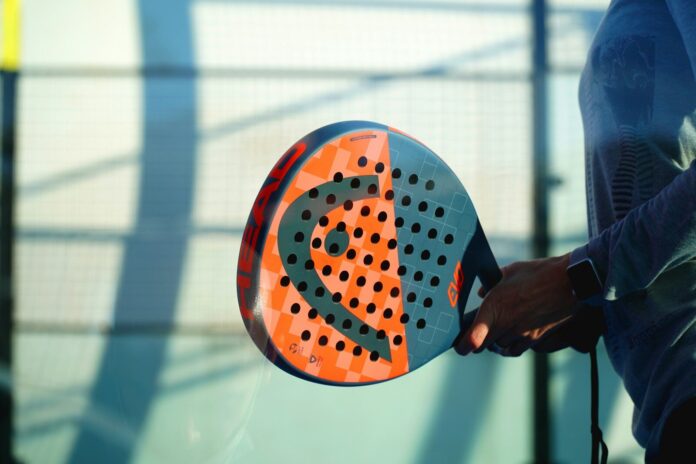

To avoid padel elbow after 35, build forearm and shoulder strength before you need it, warm up properly before every match, and add matches gradually instead of jumping from one to four a week. The elbow is the most commonly injured body part in padel, and most problems are overuse injuries that strength work and smarter scheduling can prevent.
That matters because padel is exploding. The International Padel Federation (FIP) says more than 35 million people now play, in 150 countries. If you are one of the many adults who picked up a racket after years away from sport, your tendons may not have caught up with your enthusiasm.
Key takeaways
- A 2023 systematic review found the elbow is the most common injury site in padel, followed by the knee, shoulder and lower back.
- Padel elbow is lateral elbow tendinopathy, the same condition as tennis elbow. It is an overuse problem of the forearm extensor tendons.
- Exercise beats injections and passive treatments for tennis elbow, but the effect is modest and recovery often takes months.
- Strength training cut sports injuries to under a third in a meta-analysis of 25 trials. Stretching alone did not reduce injuries.
- Calf strains (“tennis leg”) are a classic problem in men over 40, so calf strength belongs in your plan.
- A 10-minute warm-up and a 25-minute strength routine twice a week tackle the risks you can control.
Why padel is hard on bodies over 35
Padel looks easy: a smaller court, an underarm serve and walls that keep the ball in play. That is exactly why so many beginners over 35 play too much, too soon.
The sport is fast and stop-start. You lunge, twist, sprint a few metres to the glass and smash overhead, often for 90 minutes. The ball comes back off the walls, so rallies last longer than in tennis and your forearm grips the racket for more shots.
A 2023 systematic review of eight studies and 2,022 players found an injury rate of about 3 per 1,000 hours of training and 8 per 1,000 matches. Between 40% and 95% of players reported an injury, depending on the study. The players studied had average ages between 31 and 57. Most of the included studies were small surveys, so treat these figures as rough estimates rather than precise rates.
What is padel elbow?
Padel elbow is lateral elbow tendinopathy, the condition doctors still call tennis elbow. It affects the tendons that attach the forearm muscles that lift your wrist and fingers to the bony point on the outside of your elbow.
In the 2023 review, common extensor tendinopathy was the single most common diagnosis in padel. A sports medicine review from Aspetar in Qatar put lateral elbow problems at about 20% of padel injuries, while noting that the studies disagree.
Typical signs
- Pain on the outside of the elbow, sometimes spreading down the forearm.
- Pain when gripping, shaking hands, turning a door handle or lifting a mug or kettle.
- Pain on backhands and volleys, and when you grip the racket hard.
- A weaker grip than usual on the affected side.
The 2-minute elbow check
Try these three simple tests. They are not a diagnosis, but if two or more are painful on the outside of the elbow, treat it as early padel elbow and start the plan below.
- Chair lift: with your elbow straight and palm facing down, try to lift a light chair by its back. Pain at the outer elbow is a classic sign.
- Resisted wrist lift: rest your forearm on a table, palm down. Lift the back of your hand while your other hand presses down on it.
- Strong grip: squeeze a rolled towel as hard as you can with your elbow straight.
Which injuries are most common in padel?
Use this table as your prevention map. It brings together findings from the 2023 systematic review and the Aspetar review of padel injuries.
| Body part | Common problem | Why it happens in padel | Best prevention |
|---|---|---|---|
| Elbow | Lateral elbow tendinopathy | Repeated gripping, backhands, racket vibration | Forearm strength, relaxed grip, gradual load |
| Calf | Medial calf strain (“tennis leg”) | Explosive push-offs, often in deconditioned men over 40 | Calf raises, proper warm-up |
| Knee | Patellar tendon or kneecap pain, meniscus | Lunges, deep low volleys, quick turns | Leg strength, avoid big jumps in matches |
| Shoulder | Rotator cuff irritation | Overheads and smashes | Rotator cuff and upper back work |
| Lower back | Non-specific back pain | Rotation, bending for low balls | Trunk strength, hip mobility |
Calves and Achilles
The Aspetar review describes “tennis leg”, a tear at the inner part of the calf where the gastrocnemius meets the soleus. It is most common in poorly conditioned men over 40. It feels like being kicked or hit in the back of the calf during a push-off.
The same explosive push-offs load the Achilles tendon. A sudden snap or a feeling of being kicked in the heel, with trouble pushing off, needs urgent assessment. Strong calves are your best insurance for both. Footballers face the same risk, and our guide to five-a-side football after 35 covers Achilles and hamstring protection in more detail.
Risk factors you can control
The Aspetar review lists several risk factors. Some you cannot change, such as age and a previous injury. Many you can:
- Training load and recovery: going from one match a week to daily play is the classic trigger.
- Warm-up: an inadequate warm-up is a risk factor, although no specific padel warm-up has yet been proven in a trial.
- Equipment: a new or different racket or new shoes can trigger overuse problems. Racket vibration has been linked to elbow pain.
- Muscle weakness and stiffness: weak forearms, calves and hips are an easy fix with the plan below.
- Technique: hitting late backhands with a bent wrist and a death grip loads the forearm tendons.
The padel-proof strength plan (twice a week)
Strength training has some of the best injury-prevention evidence in sport. In a 2014 meta-analysis of 25 trials with 26,610 participants, strength training reduced sports injuries to less than a third. Stretching alone made no difference.
Do this routine twice a week, ideally not on the day before a match. It takes about 25 minutes. If you already lift, add the forearm and calf work to your sessions. New to lifting? Start with our strength training after 35 guide.
| Exercise | Sets × reps | What it protects |
|---|---|---|
| Wrist extension with dumbbell (slow 3-second lowering) | 3 × 15 | Elbow, forearm tendons |
| Rubber bar twist or towel wring | 3 × 10 each way | Elbow, grip |
| Standing calf raise, then single leg | 3 × 15 | Calf, Achilles |
| Bent-knee calf raise (seated or wall sit) | 3 × 15 | Soleus, Achilles |
| Reverse lunge or split squat | 3 × 8 each leg | Knees, hips |
| Band external rotation | 2 × 15 each arm | Shoulder |
| Side plank | 3 × 20–30 s each side | Lower back, trunk rotation |
Progression rules
- Increase dumbbell weight once 15 reps feel easy, typically by 0.5–1 kg (1–2 lb) for the wrist work.
- Move to single-leg calf raises when 3 × 15 on two legs feels easy, then add a backpack or dumbbell.
- Expect results over 6–12 weeks. Tendons adapt slowly.
How to treat padel elbow if you already have it
Most cases get better without surgery or injections. Ireland’s health service (HSE) says tennis elbow usually lasts between 6 months and 2 years, and most people recover fully within a year.
Exercise is the treatment with the best long-term support. A 2021 meta-analysis of 30 randomised trials and 2,123 patients found exercise gave better results than passive treatments and corticosteroid injections, though the advantage was small and the evidence was low certainty.
A separate 2021 meta-analysis found eccentric strengthening (slow lowering) gave large short-term improvements in pain and function, with unclear long-term results. Concentric-eccentric and eccentric-only exercise appear to work about as well as each other.
A practical approach
- Reduce, do not stop: play shorter sessions or fewer matches and drop drills that flare it up. Keep moving.
- Load the tendon daily: do the slow wrist extension exercise and towel wring from the plan above, using a weight that keeps pain at a manageable level.
- Use the next-morning rule: mild discomfort during exercise is acceptable if it settles by the following morning and is not getting worse week to week. This pain-monitoring approach comes from a randomised trial in Achilles tendon pain and is widely used for other tendons.
- Check your kit: a softer or lighter racket, a slightly larger grip and a looser hold can reduce strain. Avoid switching rackets often.
- Get help if it lingers: a physiotherapist can tailor the loading and check your technique.
Counterforce straps are popular. Some players find them helpful for short-term relief, but they are not a substitute for strengthening.
The 10-minute padel warm-up
Arriving five minutes before your slot and going straight to smashes is a common mistake in club padel. Use this routine, or build your own sport-specific version with our free sport warm-up tool.
- Raise (2 minutes): easy jog around the court, side shuffles, backward jogging.
- Mobilise (2 minutes): arm circles, trunk rotations, walking lunges with a twist, ankle rocks against the glass.
- Activate (3 minutes): 15 calf raises, 10 squats, 10 band or bodyweight shoulder rotations, wrist circles and 10 gentle wrist extensions.
- Rally (3 minutes): soft volleys at the net, then groundstrokes at increasing pace, then a few lobs and easy overheads before any full smashes.
How much padel is too much?
No study gives a safe number of matches for players over 35. Use the same principle as other sports: build gradually.
- If you are new or returning, start with one or two matches a week for the first month.
- Add one extra session at a time, and hold it for a couple of weeks before adding another.
- Avoid back-to-back days of long matches early on, especially in heat.
- Build a base of easy cardio between matches so you tire less late in games. Our zone 2 training guide shows how.
- Hydrate well on hot courts. See our hydration and electrolytes guide.
If your knees also complain, our guide to knee pain when running after 40 explains the hip and knee strength work that helps.
Safety note: Get urgent help if you feel a sudden snap or kick in the back of the heel or calf and cannot push off normally, as this may be an Achilles rupture. See a doctor if elbow pain comes with numbness or tingling in the hand, swelling, or follows a fall, or if it does not improve after a few weeks of reduced play. Stop and get checked for chest pain, unusual breathlessness or faintness on court. Ask your doctor or pharmacist before relying on painkillers or anti-inflammatory gels to keep playing.
FAQ
Is padel bad for your elbow?
Padel is not bad for your elbow if you build up gradually and keep your forearm strong. The elbow is the most commonly injured area in padel, mostly due to overuse, sudden increases in play and a tense grip.
Should I stop playing padel with tennis elbow?
Usually you can keep playing at a lower volume while you strengthen the tendon. If pain is sharp, worsening, or lasting into the next day, cut back further and see a physiotherapist.
How long does padel elbow take to heal?
Tennis elbow commonly lasts 6 months to 2 years, and most people recover within a year. Consistent strengthening and sensible load usually speed things up.
Is padel good exercise for men over 40?
Yes. It combines short sprints, agility and hand-eye coordination with social play, which helps people stick with it. Pair it with strength training so your tendons keep up with your enthusiasm.
Which padel racket is best for tennis elbow?
No racket has been proven to prevent padel elbow. Players with elbow pain often prefer a lighter, softer racket with good vibration damping and a grip that lets them hold it without squeezing. Avoid frequent racket changes.
Free tool: build a 10-minute pre-match routine with the sport warm-up tool, and find elbow-friendly gym alternatives with pain-free exercise swaps.
Sources
- Dahmen J et al. Incidence, prevalence and nature of injuries in padel: a systematic review. BMJ Open Sport Exerc Med, 2023.
- Eirale C, de Gasperis N. Injuries in padel. Aspetar Sports Medicine Journal, 2023.
- International Padel Federation. FIP World Padel Report 2025.
- Karanasios S et al. Exercise interventions in lateral elbow tendinopathy have better outcomes than passive interventions, but the effects are small. Br J Sports Med, 2021.
- Chen Z, Baker NA. Effectiveness of eccentric strengthening in the treatment of lateral elbow tendinopathy: a systematic review with meta-analysis. J Hand Ther, 2021.
- Lauersen JB, Bertelsen DM, Andersen LB. The effectiveness of exercise interventions to prevent sports injuries: a systematic review and meta-analysis. Br J Sports Med, 2014.
- Silbernagel KG et al. Continued sports activity, using a pain-monitoring model, during rehabilitation in patients with Achilles tendinopathy. Am J Sports Med, 2007.
- HSE (Ireland). Tennis elbow.
This article is for general education and is not medical advice. Check with your doctor before starting a new training or nutrition plan, especially if you have a health condition.

