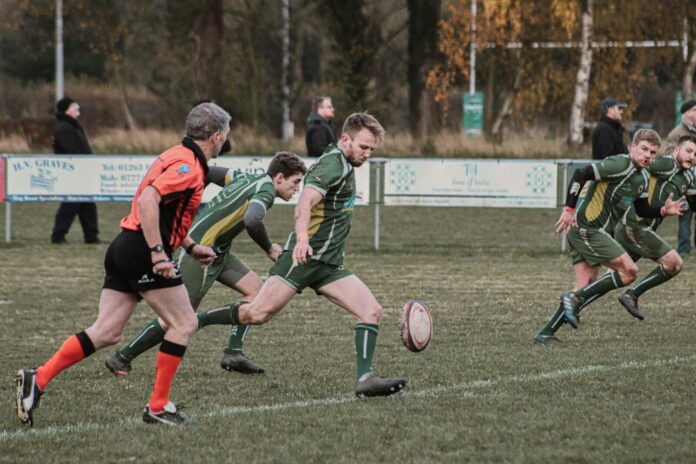

To avoid hamstring and Achilles injuries in five-a-side football after 35, do Nordic hamstring curls and calf raises every week, warm up properly before kick-off, and never go from zero to three games a week. In a trial of 579 amateur footballers, adding Nordic curls cut the hamstring injury rate by about two-thirds. Strong calves and a proper warm-up add further protection.
Key takeaways
- Older age and a previous hamstring strain are the strongest risk factors for a new one. A past strain nearly triples the risk.
- Injury prevention programmes that include Nordic hamstring curls roughly halve hamstring injury rates, according to a meta-analysis of 8,459 athletes.
- The FIFA 11+ warm-up reduced overall football injuries by about 39% in a meta-analysis of trials in recreational and sub-elite players.
- In a Finnish study, Achilles ruptures peaked at ages 30–39, mostly in men and mostly during ball sports.
- A 10-minute pre-match routine and two 15-minute prehab sessions a week cover the essentials.
Why five-a-side football after 35 is so hard on hamstrings and Achilles
Five-a-side is football in fast-forward. Small pitches mean constant sprints, sudden stops, turns and shots, with little time to jog and recover.
That is exactly the pattern that loads the hamstrings (sprinting and kicking) and the Achilles tendon (explosive push-offs and quick changes of direction). Add a desk job, a cold evening, a car journey straight to the pitch and a decade since your last pre-season, and the risk climbs.
Age itself matters too. A 2020 meta-analysis pooling 78 studies and more than 71,000 athletes found older age was one of the strongest risk factors for hamstring strain.
Are you at high risk? A 2-minute self-check
The same 2020 meta-analysis identified the factors most strongly linked with hamstring strain. Tick any that apply to you. This is not a validated score, but each tick is a reason to take the prehab plan below seriously.
| Risk factor | What the research found | Applies to you? |
|---|---|---|
| Any previous hamstring strain | About 2.7 times the risk | Yes / No |
| A hamstring strain in the past year | About 4.8 times the risk | Yes / No |
| Previous ACL (knee ligament) injury | About 1.7 times the risk | Yes / No |
| Previous calf strain | About 1.5 times the risk | Yes / No |
| Older age | One of the strongest risk factors | Over 35? Yes |
| No regular sprinting or strength work | Running exposure and hamstring strength were consistently linked with risk | Yes / No |
Two or more ticks? Start the Nordic curls this week and be strict about the warm-up.
The Nordic hamstring curl: the best-evidenced fix
The Nordic hamstring curl is a kneeling exercise where a partner (or a fixed bar or sofa) holds your heels and you slowly lower your body forward, resisting with your hamstrings. It trains the muscle while it lengthens under load, which is when sprinting strains tend to happen.
What the trials show
In a 2015 randomised trial, 579 male amateur footballers from 40 teams were split into two groups. One group added Nordic curls to normal training, 25 sessions over 13 weeks. Hamstring injuries fell from 0.8 to 0.25 per 1,000 player hours, roughly a 70% reduction. Players completed 91% of the planned sessions.
A 2019 meta-analysis of 15 studies and 8,459 athletes found programmes that included Nordic curls reduced hamstring injuries by up to 51%. The effect held, slightly smaller, when only randomised trials or lower-bias studies were included.
How to do it
- Kneel on a cushion or folded towel. Have a teammate hold your ankles firmly, or hook your heels under a secure bar or heavy sofa.
- Keep your body straight from knees to head, hips pushed forward.
- Lower yourself forward as slowly as you can, resisting with your hamstrings.
- When you can no longer hold it, catch yourself with your hands in a push-up position.
- Push back up with your hands. The lowering is the important part.
Expect sore hamstrings for a few days after the first sessions. That is why the plan below starts with very low volume.
Achilles tendon rupture: the injury every 35+ footballer fears
An Achilles rupture often happens during an explosive push-off, a sudden lunge or a quick change of direction. People describe feeling as if they were kicked in the back of the heel.
A Finnish study of 110 ruptures found incidence was highest at ages 30–39, men outnumbered women by about 5.5 to 1, 81% happened during sport, and 88% of those during ball games. A smaller UK report of recreational athletes (average age 46), presented as a conference abstract, found football caused nearly half of the ruptures in men. Many people in that study never returned to their previous level of sport. Both studies are small, so treat the exact figures as a rough guide.
No trial has proven a way to prevent Achilles ruptures. But strong calves handle explosive loads better, and a warm-up prepares the tendon for sprinting. Both are low-cost and help in other ways too. Padel players face the same calf and Achilles risks, as our guide to padel fitness after 35 explains.
Does the FIFA 11+ warm-up work for adults?
The FIFA 11+ is a structured warm-up of running drills plus strength, jumping and balance exercises. It was first tested in a 2008 trial of 1,892 young female players in Norway, where it cut overall injury risk by about a third and severe injuries by almost half.
A 2017 meta-analysis of trials in recreational and sub-elite football found the FIFA 11+ reduced overall injuries by about 39%. The earlier, simpler FIFA 11 showed no clear effect, so the content and intensity of the warm-up matter.
Most five-a-side players do not have time for a long warm-up before a 60-minute pitch booking. The routine below borrows the key ideas in about 10 minutes.
Your 10-minute pre-match warm-up
- Jog and move (3 minutes): easy jogging, side-steps, backward jogging, skips and high knees across the pitch.
- Dynamic mobility (2 minutes): leg swings forward and sideways, walking lunges, hip openers, ankle rocks.
- Strength and balance (2 minutes): 10 bodyweight squats, 10 calf raises, 3–5 slow Nordic lowers if you have a partner, 20 seconds single-leg balance each side.
- Build speed (3 minutes): 3–4 runs building from 60% to 90% effort over 15–20 metres, then a few sharp cuts and turns, then some passes and shots at increasing power.
Build a version you can save on your phone with our free sport warm-up tool.
The weekly prehab plan
Do this twice a week, ideally not the day before a game. Each session takes about 15 minutes. If you already lift weights, slot it into your gym days. Our strength training after 35 guide shows how to build a full plan around it.
| Exercise | Weeks 1–2 | Weeks 3–6 | Week 7 onwards |
|---|---|---|---|
| Nordic hamstring curl | 2 × 4–5 | 3 × 6–8 | 2–3 × 6–8, once or twice a week |
| Single-leg calf raise (straight knee) | 3 × 12 each | 3 × 15 each | 3 × 12 each, holding a weight |
| Bent-knee calf raise | 3 × 12 each | 3 × 15 each | 3 × 12, holding a weight |
| Single-leg Romanian deadlift | 2 × 8 each | 3 × 8 each | 3 × 8, heavier |
| Copenhagen side plank (groin) | 2 × 15 s each | 3 × 20 s each | 3 × 30 s each |
Prehab rules
- Start low. Nordic curls cause soreness at first. Low volume in weeks 1–2 limits that.
- Sprint in training, not just in games. Six to eight short sprints once a week means match-day sprinting is not a shock.
- Use a counter. Our free AI rep counter uses your phone camera to count squats and other moves, handy for warm-ups and home sessions.
- Feed your tendons. Tendons adapt slowly. Our guide to collagen for joints and tendons covers what the evidence says on nutrition.
How many games a week is safe?
There is no proven number for players over 35. The pattern behind most injuries is a sudden change: from no football to three games in a week, or from summer break straight into a tournament.
- Coming back after months off? Start with one game a week for a month, plus the prehab plan.
- Add a second game only once the first leaves you only mildly sore the next day.
- Avoid back-to-back days of games until you have built up for several weeks.
- Sleep is part of recovery. See our guide to sleeping better after 35.
What to do if you feel a hamstring twinge
Stop playing. Playing on with a “tight” hamstring is how small strains become big ones. A recent hamstring strain was the single strongest risk factor in the 2020 meta-analysis, at almost five times the risk, so a rushed return is the riskiest move of all.
A physiotherapist can guide a gradual return that rebuilds strength and sprinting before you play again. If you have knee pain when you run as well, see our guide to knee pain when running after 40.
Safety note: Seek urgent medical help if you feel a snap, pop or kick in the back of the heel or calf, cannot push off or stand on tiptoe on that leg, or see a gap above the heel, as Achilles ruptures need prompt assessment. Get checked for a hamstring injury with a pop, large bruising or difficulty walking. Stop playing and seek help for chest pain, unusual breathlessness, palpitations or dizziness. Ask your doctor or pharmacist before using painkillers to play through pain.
FAQ
How do I stop pulling my hamstring playing football?
Do Nordic hamstring curls once or twice a week, warm up with gradual sprints before kick-off, and include some sprinting in training. Programmes with Nordic curls roughly halved hamstring injuries in a large meta-analysis.
Why do so many men over 35 rupture their Achilles playing football?
In a Finnish study, Achilles ruptures were most common at ages 30–39, mostly in men and mostly during ball sports with explosive push-offs. Irregular play, weaker calves and no warm-up likely add to the risk.
How often should I do Nordic hamstring curls?
The 2015 trial used 25 sessions over 13 weeks, roughly twice a week. After the first couple of months, one or two sessions a week is a reasonable maintenance dose.
Is five-a-side football good exercise after 40?
Yes. It combines sprinting, agility and social fun, which helps you stick with it. Pair it with strength and prehab work so your hamstrings, calves and tendons can cope.
Should I stretch my hamstrings before football?
A dynamic warm-up with leg swings, gradual sprints and strength moves is better than long static stretches. A meta-analysis of 25 trials found stretching alone did not reduce sports injuries, while strength training did.
Free tool: save your pre-match routine with the sport warm-up tool, and count your squats and other reps hands-free with the AI rep counter.
Sources
- van der Horst N et al. The preventive effect of the Nordic hamstring exercise on hamstring injuries in amateur soccer players: a randomized controlled trial. Am J Sports Med, 2015.
- van Dyk N, Behan FP, Whiteley R. Including the Nordic hamstring exercise in injury prevention programmes halves the rate of hamstring injuries. Br J Sports Med, 2019.
- Green B et al. Recalibrating the risk of hamstring strain injury: a systematic review and meta-analysis. Br J Sports Med, 2020.
- Soligard T et al. Comprehensive warm-up programme to prevent injuries in young female footballers: cluster randomised controlled trial. BMJ, 2008.
- Thorborg K et al. Effect of specific exercise-based football injury prevention programmes on the overall injury rate in football: a systematic review and meta-analysis of the FIFA 11 and 11+ programmes. Br J Sports Med, 2017.
- Leppilahti J, Puranen J, Orava S. Incidence of Achilles tendon rupture. Acta Orthop Scand, 1996.
- Khan et al. Achilles tendon rupture and return to sport in non-elite “weekend warrior” athletes. British Orthopaedic Association conference abstract, Orthopaedic Proceedings, 2013.
- Lauersen JB, Bertelsen DM, Andersen LB. The effectiveness of exercise interventions to prevent sports injuries: a systematic review and meta-analysis. Br J Sports Med, 2014.
This article is for general education and is not medical advice. Check with your doctor before starting a new training or nutrition plan, especially if you have a health condition.

