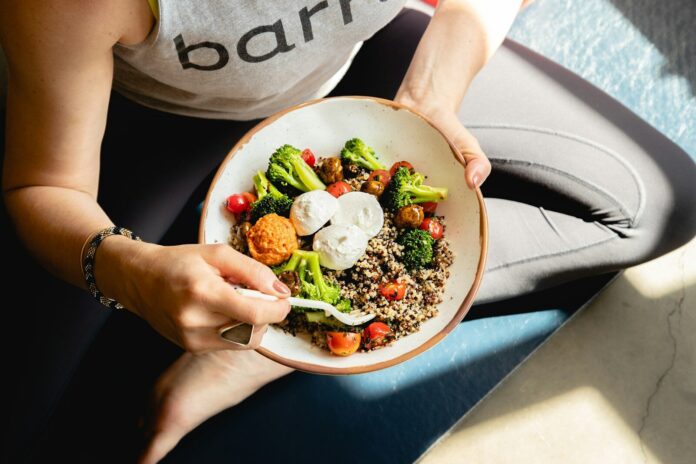

Most active women over 35 do well on about 1.0–1.6 g of protein per kilogram of body weight a day, which works out to roughly 60–100 g for a 60 kg (132 lb) woman. That is more than the official minimum of 0.8 g/kg, which was set to prevent deficiency, not to help you build or keep muscle while you train. The easiest way to get there is a palm-sized portion of protein at every meal.
Key takeaways
- The official minimum for adults is 0.8 g of protein per kg a day in the US and 0.83 g/kg in Europe. Think of it as a floor, not a target.
- Experts on ageing muscle recommend at least 1.0–1.2 g/kg for older adults, and 1.2 g/kg or more for those who exercise.
- If you lift weights and want to build muscle, gains from extra protein level off at around 1.6 g/kg a day.
- Spread protein across 3–4 meals rather than saving it all for dinner.
- Vegetarian women can hit these targets with dairy, eggs, soy, lentils, beans and chickpeas.
Why protein matters more after 35
Muscle is not just about looks. It helps you carry shopping, climb stairs, keep your balance and stay independent as you age. From midlife onward, muscle tends to decline slowly unless you give your body reasons to keep it: strength training and enough protein.
Protein supplies the building blocks your muscles use to repair after exercise. Training is the signal; protein is the material. One without the other gets you only part of the way. A large 2018 meta-analysis of 49 trials found that extra protein boosted muscle gains from resistance training, and it also found that the effect gets smaller with age. That does not mean protein matters less as you get older. It means the training stimulus and a steady, adequate intake both count.
Many women in their 40s also notice changes linked to perimenopause, such as shifts in body shape or energy. Eating enough protein and lifting are sensible habits through those years, but they are not a treatment for symptoms. For questions about perimenopause or menopause, talk to your doctor.
How much protein do women need? The numbers
Here is how the main recommendations compare:
- 0.8 g/kg a day: the US Recommended Dietary Allowance for adult men and women, set by the National Academies. It covers basic needs for most healthy adults.
- 0.83 g/kg a day: the European Food Safety Authority’s population reference intake for adults. EFSA also notes that up to twice that amount is considered safe for adults.
- 1.0–1.2 g/kg a day: the PROT-AGE expert group’s recommendation for people over 65 to maintain muscle and function, with 1.2 g/kg or more for those who exercise.
- Around 1.6 g/kg a day: the point beyond which extra protein gave no further muscle gains with resistance training in the 2018 meta-analysis.
For a busy woman of 35–50 who trains 3–4 hours a week, a sensible target is 1.2 g/kg on most days. If you lift weights seriously, are trying to lose fat while keeping muscle, or simply feel hungrier on a lower intake, aim higher, towards 1.6 g/kg.
Your daily protein target by body weight
Find your weight in the first column. The per-meal figure assumes you eat four times a day (three meals and a snack).
| Body weight | Minimum (0.8 g/kg) | Active (1.2 g/kg) | Lifting focus (1.6 g/kg) | Per meal (4 meals) |
|---|---|---|---|---|
| 50 kg (110 lb) | 40 g | 60 g | 80 g | 15–20 g |
| 60 kg (132 lb) | 48 g | 72 g | 96 g | 18–24 g |
| 70 kg (154 lb) | 56 g | 84 g | 112 g | 21–28 g |
| 80 kg (176 lb) | 64 g | 96 g | 128 g | 24–32 g |
| 90 kg (198 lb) | 72 g | 108 g | 144 g | 27–36 g |
If you are carrying a lot of extra body fat, base your target on a healthy goal weight rather than your current weight, otherwise the number will be higher than you need.
Myths vs evidence
| Myth | What the evidence says |
|---|---|
| “The RDA is all I need.” | The RDA prevents deficiency in most healthy adults. Expert groups recommend more for older and active people. |
| “Protein is for bodybuilders.” | Protein supports the muscle you need for everyday strength, balance and long-term independence. |
| “More is always better.” | Muscle gains from extra protein level off around 1.6 g/kg a day in trials of people who lift. |
| “You need shakes to hit your target.” | Ordinary foods do the job. Powders are just a convenient extra. |
| “Vegetarians can’t get enough.” | Dairy, eggs, soy and pulses make the targets realistic, with a little planning. |
Spread it across the day
Many people eat a small, carb-heavy breakfast, a light lunch and most of their protein at dinner. A more even pattern is easier on your appetite and makes your daily target easier to reach. Aim for a solid protein portion at breakfast, lunch and dinner, and add a protein-rich snack if you train or have a long gap between meals.
A practical rule of thumb: build each meal around one palm-sized portion of a protein food, then add vegetables or fruit, a source of whole grains or starch and a little healthy fat.
Protein foods to build your meals around
These figures come from the Harvard T.H. Chan School of Public Health’s Nutrition Source and give you a feel for typical portions:
| Food | Portion | Protein (approx.) |
|---|---|---|
| Lentils, cooked | 1 cup | 18 g (plus 15 g fibre) |
| Salmon, grilled | 4 oz (113 g) | 30 g |
| Chicken thigh, skinless | 4 oz (113 g) | 28 g |
| Milk | 8 oz (240 ml) | 8 g |
| Almonds, dry roasted | 1 oz (28 g) | 6 g |
Other good choices include eggs, Greek yoghurt, cottage cheese, fish such as tuna or sardines, tofu, tempeh, edamame, chickpeas, beans, paneer and quinoa. Check food labels for exact amounts, since brands vary. Our guide to muscle-building foods covers more options, including vegetarian ones.
Easy vegetarian protein
- Breakfast: Greek yoghurt with oats, berries and seeds, or scrambled tofu on wholegrain toast.
- Lunch: a lentil or chickpea salad with feta, or a bean and vegetable soup with a slice of cheese on rye.
- Dinner: tofu stir-fry, dal with rice and yoghurt, or a paneer and vegetable curry.
- Snack: cottage cheese with fruit, roasted chickpeas, edamame or a glass of milk with a handful of nuts.
Combining different plant proteins across the day, such as pulses with grains, helps you cover all the amino acids your body needs.
A sample day at around 90 g
Here is how a 70 kg woman could reach roughly 1.2–1.3 g/kg without supplements. Exact numbers depend on your brands and portions.
- Breakfast: two eggs scrambled with spinach on wholegrain toast, plus a glass of milk.
- Lunch: a large salad with 1 cup of lentils, feta and roasted vegetables.
- Snack: Greek yoghurt with a handful of almonds.
- Dinner: 4 oz of salmon or chicken thigh (or a tofu stir-fry) with rice and vegetables.
Protein, training and fat loss
Protein works best alongside strength training. Two or three sessions a week give your muscles a reason to use the protein you eat. If you need a starting point, try our 3-day strength training plan for women over 35.
If you want to lose fat, keeping protein at the higher end of the range while eating slightly fewer calories helps protect your muscle and keeps you fuller. Avoid crash diets: very low intakes make it harder to train well and recover. Good sleep matters too, because your body does much of its repair overnight. Our guide to sleeping better after 35 has practical tips.
Common mistakes to avoid
- A light breakfast. Toast and coffee or a pastry often adds up to very little protein. Adding eggs, yoghurt or a glass of milk is the easiest fix for most women.
- Counting the whole dish. A bowl of pasta with a spoonful of cheese is mostly carbohydrate. Check that a real protein portion is on the plate.
- Relying on bars and snacks. Many “protein” bars contain less than you think and a lot of sugar. Read the label.
- Dieting too hard. Cutting calories sharply often cuts protein too, which makes it harder to keep muscle. Protect your protein first when you eat less.
- Forgetting the training. Protein without a strength signal does far less for your muscles. Pair it with two or three resistance sessions a week.
Do you need protein powder?
No, but it can help. A scoop of whey, soy or pea protein in a smoothie or stirred into yoghurt is a quick way to add protein on busy days. Treat it as food, not magic: it does the same job as a meal with a similar amount of protein. Choose a product that has been independently tested, and keep the rest of your intake from whole foods, which also bring fibre, vitamins and minerals.
Safety note: People with severe chronic kidney disease may need to limit protein, so if you have kidney disease, ask your doctor or a registered dietitian before increasing your intake. The same applies if you have another long-term condition or are pregnant. For most healthy adults, intakes in the ranges in this article are considered safe.
FAQ
How much protein does a 40-year-old woman need a day?
At least 0.8 g per kg of body weight, but if you are active, 1.2–1.6 g/kg is a better target. For a 65 kg woman that is about 78–104 g a day.
Can I eat too much protein?
For healthy adults, EFSA considers up to about twice its reference intake safe. Very high intakes bring little extra benefit for muscle, and they can crowd out other foods. If you have kidney disease, ask your doctor first.
Is plant protein as good as animal protein?
Plant foods can meet your needs when you eat a variety of them across the day. Soy foods are particularly useful. Combining pulses with grains helps cover all essential amino acids.
Should I eat protein right after a workout?
Your total daily intake matters most. Still, having a meal or snack with protein within a couple of hours of training is an easy habit that fits most routines.
Does protein help with weight loss?
It helps you feel full and protects muscle while you eat a little less. Weight loss still depends on your overall calorie intake and activity.
Free tool: work out your own daily target with the protein calculator, then see how today’s habits shape your strength later in life with Future You.
Sources
- Institute of Medicine (National Academies). Dietary Reference Intakes for energy, carbohydrate, fiber, fat, fatty acids, cholesterol, protein and amino acids: protein and amino acids. 2005.
- EFSA Panel on Dietetic Products, Nutrition and Allergies. Scientific opinion on dietary reference values for protein. EFSA Journal, 2012.
- Bauer J et al. Evidence-based recommendations for optimal dietary protein intake in older people: a position paper from the PROT-AGE Study Group. J Am Med Dir Assoc, 2013.
- Morton RW et al. A systematic review, meta-analysis and meta-regression of the effect of protein supplementation on resistance training-induced gains in muscle mass and strength in healthy adults. Br J Sports Med, 2018.
- Harvard T.H. Chan School of Public Health. The Nutrition Source: protein.
This article is for general education and is not medical advice. Check with your doctor before starting a new training or nutrition plan, especially if you have a health condition.

