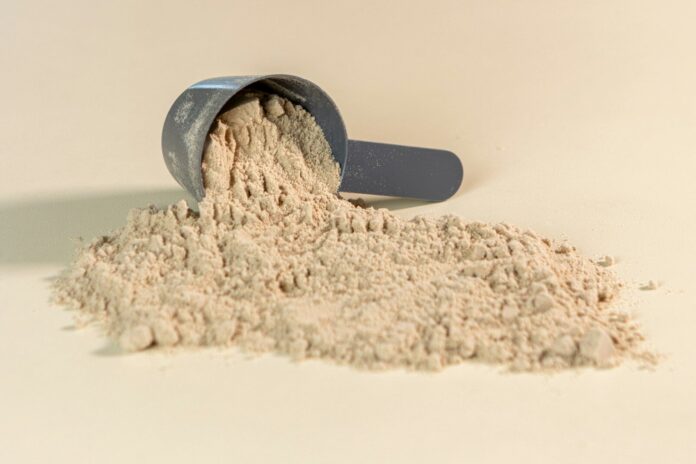

Do you need protein powder? Probably not, if you already eat protein-rich food at three or more meals a day. Protein powder is a convenient food, not a muscle-builder in itself: a 2018 meta-analysis of 49 trials found its benefits for muscle gain stopped once total intake passed about 1.6 g of protein per kg of body weight a day.
Where it earns its place is filling a gap you can’t easily fill with food. Here is how to tell if you have that gap, whether whey or plant protein is better, what it costs per 25 g compared with eggs, yogurt and lentils, and how to avoid the heavy-metal and contamination problems.
Key takeaways
- Protein powder adds a modest boost to strength training gains, mainly when your diet is short of about 1.6 g/kg a day.
- Soy protein supplements produced strength and lean-mass gains similar to whey and other animal proteins in a 2018 meta-analysis.
- Per 25 g of protein, powder is often one of the cheapest options, though dried lentils and tofu can be cheaper.
- Testing has found lead in many protein powders, especially plant-based ones. Stick to one serving a day and choose tested brands.
- Supplements are not approved by the FDA before sale, so look for Informed Sport or NSF certification.
Do you actually need protein powder?
The best evidence comes from a 2018 systematic review and meta-analysis of 49 randomised trials with 1,863 people doing resistance training. Adding protein supplements increased gains in fat-free mass by about 0.3 kg and one-rep-max strength by about 2.5 kg on average.
Those are real but small effects. More importantly, extra protein stopped adding muscle once total intake reached about 1.6 g/kg a day, and the benefit was smaller in older participants. For an 85 kg man, 1.6 g/kg is roughly 135 g of protein a day.
So the question is not “powder or no powder?” It is “do I reach my daily target from food?” Our guide to how much protein you need after 35 explains how to set that target.
The 2-minute checklist: should you buy protein powder?
Give yourself one point for each “yes.”
- Do you usually eat less than about 1.6 g of protein per kg of body weight a day?
- Do you skip breakfast or have a low-protein breakfast (under 20 g) most days?
- Are you vegetarian or vegan and finding it hard to reach your target?
- Are you in a calorie deficit to lose fat and struggling to keep protein high?
- Do you train early or late and often go 4 hours or more without a protein-rich meal?
- Does your appetite drop with age, illness or stress, so big meals are hard?
0–1 points: skip it and spend the money on food. 2–3 points: powder is a convenient tool, a scoop a day is plenty. 4–6 points: a daily shake will probably make hitting your target much easier, but fix your meals too.
Whey vs plant protein powder: which is better?
For building muscle, the gap is smaller than the marketing suggests. A 2018 meta-analysis of 9 studies (266 people) found that soy protein supplements produced similar gains in strength and lean mass to whey and other animal proteins during resistance training.
| Type | Best for | Watch out for |
|---|---|---|
| Whey concentrate | Most people; cheap, mixes well, high in leucine | Contains some lactose |
| Whey isolate | Lactose-sensitive men; lower in carbs and fat | Costs more |
| Casein | A slow-digesting evening shake | Thicker texture; also contains lactose |
| Soy isolate | Vegans; strongest plant evidence | Avoid with a soy allergy |
| Pea or pea-rice blends | Vegans avoiding soy or dairy | Smaller evidence base; testing has found more lead in plant powders |
Worried about soy and hormones? A 2021 meta-analysis of 41 clinical studies found no significant effect of soy protein or isoflavones on testosterone or oestrogen in men. For more on plant protein, read our guide to plant-based eating for men over 35.
Protein powder vs food: cost per 25 g of protein
The amounts below come from USDA FoodData Central. Prices vary hugely between countries and shops, so the cost column uses example prices that you should replace with your own: cost = your price per kg × grams needed ÷ 1,000.
| Source | Amount for 25 g protein | Calories | Example cost (price used) |
|---|---|---|---|
| Whey protein powder | 32 g (about 1 scoop) | 113 | $0.96 (at $30/kg) |
| Soy protein isolate | 28 g | 95 | $0.70 (at $25/kg) |
| Chicken breast, raw | 111 g | 133 | $1.00 (at $9/kg) |
| Eggs | 4 large (199 g) | 285 | $1.33 (at $4/dozen) |
| 0% Greek yogurt | 245 g | 145 | $1.47 (at $6/kg) |
| 2% cottage cheese | 239 g | 194 | $1.20 (at $5/kg) |
| Firm tofu | 145 g | 208 | $0.87 (at $6/kg) |
| Milk, 2% | 760 ml | 380 | $0.91 (at $1.20/litre) |
| Dried lentils | 102 g (dry weight) | 357 | $0.31 (at $3/kg) |
Two things stand out. Powder delivers protein with the fewest calories, which helps when you are cutting. And whole foods bring fibre, calcium, iron and other nutrients that a shake does not. Lentils are the cheapest protein on the list, but 25 g comes with over 60 g of carbohydrate, so they work best as part of a main meal. For how processed foods such as shakes and bars fit into a healthy diet, see our guide to ultra-processed foods: what the evidence says.
Need more food ideas? Our list of the best muscle building foods covers meat, dairy and vegetarian options, and the protein foods finder lets you compare them.
Heavy metals in protein powder: how worried should you be?
In 2025, Consumer Reports tested 23 popular protein powders and shakes. More than two-thirds contained more lead in a single serving than the amount its experts consider safe to consume in a day. Plant-based products averaged about nine times the lead of dairy-based ones.
That sounds alarming, so keep it in proportion. Even the worst products were far below levels that cause immediate harm; the concern is long-term build-up from daily use. Plant ingredients can take up metals from soil, one likely reason plant powders tend to test higher.
A 2020 risk assessment of test data from 148 protein powders reached a calmer conclusion. Modelled blood lead levels stayed below the CDC benchmark it used, and the authors judged that the metal levels did not pose an increased non-cancer risk for typical users. They also noted limitations in the underlying test data.
The practical takeaway:
- Limit powder to one serving a day and get the rest of your protein from food.
- If you use a plant powder, pick a brand that publishes independent heavy-metal results.
- Whey and other dairy powders generally tested lowest for lead.
- Rotate brands rather than taking the same product for years.
Third-party testing: Informed Sport and NSF explained
Here is the uncomfortable fact: the US FDA states that it does not have the authority to approve dietary supplements for safety and effectiveness before they are sold. Other countries have their own rules, so check what applies where you live.
Independent certification fills part of that gap:
- Informed Sport: tests every batch of a certified product for a broad range of substances banned in sport before it reaches the market, and keeps blind-testing samples after certification.
- NSF Certified for Sport: checks that what is on the label is in the tub, screens for harmful contaminants, and tests for around 280 banned substances.
Neither mark is a guarantee, and neither is mainly a heavy-metal test. But a certified product is far less likely to contain something you didn’t sign up for. If you compete in a drug-tested sport, use only certified products.
How to use protein powder well
- Dose: one scoop giving 20–40 g of protein per serving is enough; the ISSN suggests about 0.25 g/kg per meal.
- Timing: total daily protein matters far more than the exact minute you drink it. Use it where your day has a gap, often breakfast or after training.
- Label check: look for grams of protein per serving, a short ingredient list, little added sugar and no “proprietary blends” hiding stimulants.
- Mix it into food: stir it into porridge or yogurt to turn a low-protein breakfast into a 30 g one. See our 20 vegetarian high-protein breakfasts for ideas.
Sample day: where one scoop fits
Here is how an 85 kg man could reach about 140 g of protein, close to his 1.6 g/kg target, with a single shake:
- Breakfast: Greek yogurt bowl with berries and walnuts (about 30 g)
- Lunch: lentil and chicken or tofu grain bowl (about 35 g)
- After training: one scoop of whey or soy protein in milk or water (about 25 g)
- Dinner: eggs, fish, paneer or beans with vegetables and rice (about 40 g)
- Snack: a glass of milk or a handful of nuts (about 10 g)
Take the shake away and you would need one extra protein-rich snack, such as cottage cheese on toast. That is the real choice: convenience versus one more bit of cooking.
Safety note: If you have chronic kidney disease or reduced kidney function, ask your doctor or dietitian before using protein powder or raising your protein intake. Choose a dairy-free option if you have a milk allergy, and avoid soy powders if you are allergic to soy. Stop any product that causes palpitations, jitteriness or stomach upset, as some “protein” products contain added stimulants.
FAQ
Is it OK to drink a protein shake every day?
For most healthy men, one shake a day is fine as part of a balanced diet. Choose a third-party tested product, and get most of your protein from food so you also get fibre and other nutrients.
Is whey or plant protein better for building muscle?
Both work. A 2018 meta-analysis found soy protein produced similar strength and lean-mass gains to whey during resistance training. Whey is cheaper and has more leucine per gram; soy and pea blends suit vegans and people who avoid dairy.
Do protein shakes damage your kidneys?
Not in healthy people, according to a 2018 meta-analysis of 28 trials (1,358 adults) that found higher-protein diets did not harm kidney function. If you already have kidney disease, speak to your doctor first.
Is there lead in protein powder?
Many powders contain detectable lead, and plant-based ones tend to contain more. The levels are not an immediate danger, but daily use adds up, so limit yourself to one serving and choose brands with independent testing.
When is the best time to take protein powder?
Whenever it helps you reach your daily total. After training or at breakfast are common choices, but spreading protein across your meals matters more than precise timing.
Free tool: see which supplements are worth it with the Supplement Guide, and find food sources that hit your target with the Protein Foods finder.
Sources
- Morton RW et al. Effect of protein supplementation on resistance training-induced gains in muscle mass and strength: systematic review, meta-analysis and meta-regression. Br J Sports Med, 2018.
- Messina M et al. No difference between the effects of supplementing with soy protein versus animal protein on gains in muscle mass and strength in response to resistance exercise. Int J Sport Nutr Exerc Metab, 2018.
- Reed KE et al. Neither soy nor isoflavone intake affects male reproductive hormones: an expanded and updated meta-analysis of clinical studies. Reprod Toxicol, 2021.
- Jäger R et al. International Society of Sports Nutrition position stand: protein and exercise. J Int Soc Sports Nutr, 2017.
- NPR. Don’t panic, but there might be lead in your protein powder (reporting on Consumer Reports testing), 2025.
- Bandara SB, Towle KM, Monnot AD. A human health risk assessment of heavy metal ingestion among consumers of protein powder supplements. Toxicol Rep, 2020.
- US Food and Drug Administration. Dietary supplements: how FDA helps keep you safe, 2022.
- Informed Sport. About the programme.
- NSF. Supplement and vitamin certification.
- Devries MC et al. Changes in kidney function do not differ between healthy adults consuming higher- compared with lower- or normal-protein diets. J Nutr, 2018.
- USDA FoodData Central. SR Legacy nutrient data.
This article is for general education and is not medical advice. Check with your doctor before starting a new training or nutrition plan, especially if you have a health condition.

