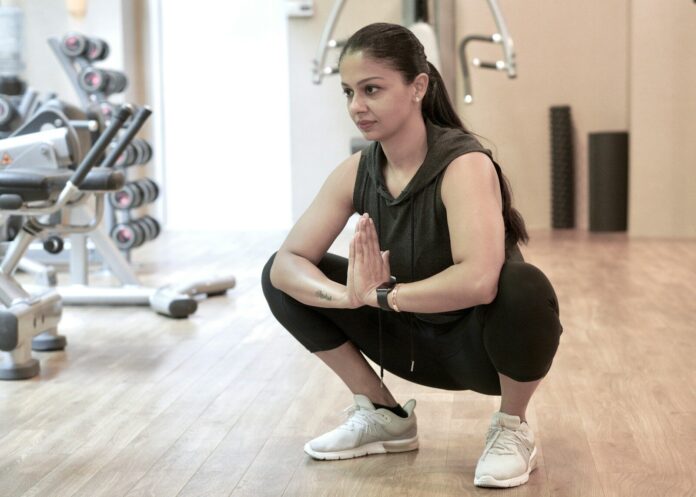

Bone health for women after 35 comes down to two things you control every week: loading your bones with strength training and impact, and eating enough calcium, vitamin D and protein. Most people reach their peak bone mass by about age 30, so from your mid-30s the goal is to hold on to what you have and slow the loss that speeds up later. It matters more than most women think: in a US national survey, 19.6% of women aged 50 and over had osteoporosis, compared with 4.4% of men.
Key takeaways
- Weight-bearing impact exercise and resistance training are the two types of exercise that matter most for bone density. Swimming and cycling are great for fitness but are not weight-bearing.
- The UK’s Royal Osteoporosis Society consensus recommends muscle strengthening on 2–3 days a week, at a weight you can lift only 8–12 times, plus moderate impact on most days, around 50 impacts a session.
- In the LIFTMOR trial, women with low bone mass who lifted heavy twice a week for 8 months gained 2.9% spine bone density, while the control group lost 1.2%.
- US guidance is 1,000 mg of calcium a day for women up to 50 and 1,200 mg from 51, plus 15 mcg (600 IU) of vitamin D. UK guidance is lower for calcium (700 mg) and 10 mcg of vitamin D.
- Yoghurt, cheese, sardines, calcium-set tofu and fortified soy milk are the easiest calcium sources, and vegetarians have plenty of options.
What happens to your bones after 35
Bone is living tissue. Your body breaks down old bone and builds new bone all the time. Through childhood and your 20s, building wins, and Mayo Clinic notes that most people reach their peak bone mass by age 30. After that, the balance slowly tips the other way.
The US National Institute of Arthritis and Musculoskeletal and Skin Diseases (NIAMS) explains that as you age, bone loss happens faster and new bone growth slows. It also notes that women have lower peak bone mass and smaller bones than men, which is one reason osteoporosis is so much more common in women.
The years around menopause speed things up, because lower oestrogen levels affect bone. NIAMS says that for many women, osteoporosis starts to develop a year or two before menopause. If you are in perimenopause or have questions about bone loss at this stage, talk to your doctor, who can advise on testing and options.
How common is weak bone?
The US National Center for Health Statistics measured bone density in adults aged 50 and over in 2017–2018:
| Adults 50+ (USA, 2017–2018) | Women | Men |
|---|---|---|
| Osteoporosis (hip or spine) | 19.6% | 4.4% |
| Low bone mass (the stage before osteoporosis) | 51.5% | 33.5% |
Osteoporosis in women in that survey also rose from 14.0% a decade earlier. Worldwide, the International Osteoporosis Foundation states that 1 in 3 women over 50 will have an osteoporotic fracture. The good news is that the habits that protect bone are the same ones that keep you strong, mobile and energetic now.
Your 2-minute bone health check
This is not a diagnosis, but it helps you see whether bone health deserves a conversation with your doctor. Tick each one that applies, based on the risk factors Mayo Clinic lists:
- A parent or sibling has had osteoporosis, especially a parent with a hip fracture.
- You have a small, slim body frame.
- You rarely eat dairy, calcium-set tofu, fortified plant milks or other calcium-rich foods.
- You smoke.
- You often drink more than the recommended limits for alcohol.
- You have taken corticosteroid tablets (such as prednisolone) for months at a time.
- You do no strength training and little weight-bearing exercise.
- You are approaching or past menopause.
How to read it: two or more ticks, or any broken bone from a simple fall, is a good reason to ask your doctor about your bone health and whether a bone density scan makes sense for you. Whatever your score, the exercise and food steps below help.
The best exercises for bone health
Bones respond to load. When muscles pull hard on them, or your body lands from a jump, bone cells get the signal to stay strong. The NHS says weight-bearing exercise and resistance exercise are particularly important for bone density.
1. Strength training
The Royal Osteoporosis Society’s 2022 consensus statement, published in the British Journal of Sports Medicine, recommends muscle strengthening on two or three days a week. The load should be the most you can lift 8–12 times, building up to three sets of each exercise.
The strongest evidence that heavier lifting is both safe and useful comes from the LIFTMOR trial. It included 101 postmenopausal women with low bone mass, average age 65. Half did 30-minute supervised sessions twice a week for 8 months: 5 sets of 5 reps at more than 85% of their one-rep maximum. The results:
| After 8 months | Heavy lifting group | Low-intensity home group |
|---|---|---|
| Lumbar spine bone density | +2.9% | −1.2% |
| Femoral neck (hip) bone density | +0.3% | −1.9% |
| Height | +0.2 cm | −0.2 cm |
| Adverse events | One minor back spasm | None reported |
Those women were older than you and already had low bone mass, and they were closely supervised. You do not need to start that heavy. But the trial shows that bones respond to real challenge, and that light, easy exercise alone is not enough to move the needle.
Good bone-loading exercises include squats, deadlifts or hip hinges, lunges and step-ups, overhead presses, rows and push-ups. Our simple 3-day strength plan for women over 35 covers all of them, with sets and progression.
2. Impact exercise
Impact means your feet leave the ground and land, or strike it firmly. The NHS lists running, skipping, dancing, aerobics and jumping on the spot as weight-bearing examples. The Royal Osteoporosis Society recommends moderate impact on most days, aiming for at least 50 impacts a session. That can be as short as 5 sets of 10 jumps.
If you have not jumped in years, build up gradually:
- Weeks 1–2: heel drops. Rise onto your toes and drop your heels to the floor firmly. 5 sets of 10.
- Weeks 3–4: stamping marches or brisk stair climbing.
- Weeks 5–6: small jumps on the spot, landing softly through the balls of your feet.
- Weeks 7+: skipping, jumping jacks, hops or short jogging intervals.
Sports with quick starts and stops, such as tennis, netball, badminton and dancing, add impact too. Brisk walking is a gentler weight-bearing option and still counts toward your weekly activity. Our 12-week walking plan for busy women builds it up step by step.
3. Balance work
Strong bones matter most when you fall. The Royal Osteoporosis Society recommends balance and muscle strength exercises at least twice a week to reduce the risk of falls. Standing on one leg while you brush your teeth, heel-to-toe walking and step-ups all count.
A weekly bone-strength plan for busy women
This plan fits into 3–4 hours a week and covers all three types of loading.
| Day | Session | Time |
|---|---|---|
| Monday | Strength A: goblet squat, Romanian deadlift, push-ups, rows. 3 sets of 8–12 | 35–45 min |
| Tuesday | 50 impacts (e.g. 5 × 10 small jumps) + brisk walk | 30 min |
| Wednesday | Rest or easy walk; 2 minutes of single-leg balance | 10–30 min |
| Thursday | Strength B: split squat or step-up, hip thrust, overhead press, lat pulldown or band pull | 35–45 min |
| Friday | 50 impacts + brisk walk, or a dance or racket session | 30–45 min |
| Saturday | Strength C (optional) or a longer walk, hike or sport | 40–60 min |
| Sunday | Rest | — |
Add weight when you can do 12 good reps on all sets. If you also want to build aerobic fitness, swap one walk for an easy zone 2 cardio session. Swimming and cycling are fine additions, but they do not replace the loading above.
Foods for strong bones
How much calcium and vitamin D do you need?
Recommendations differ a little by country. Here is what the US National Institutes of Health (NIH) and the UK’s NHS advise:
| Nutrient | Women 19–50 (NIH, USA) | Women 51–70 (NIH, USA) | Adults (NHS, UK) |
|---|---|---|---|
| Calcium | 1,000 mg/day | 1,200 mg/day | 700 mg/day |
| Vitamin D | 15 mcg (600 IU)/day | 15 mcg (600 IU)/day | 10 mcg (400 IU)/day |
| Upper limit, calcium | 2,500 mg/day | 2,000 mg/day | — |
| Upper limit, vitamin D | 100 mcg (4,000 IU)/day | 100 mcg (4,000 IU)/day | — |
Wherever you live, aiming for roughly 1,000 mg of calcium a day, mostly from food, is a sensible target in your late 30s and 40s.
The best calcium foods, including vegetarian options
Figures below come from the NIH calcium fact sheet. Check labels for fortified products, because amounts vary by brand.
| Food | Serving | Calcium |
|---|---|---|
| Plain low-fat yoghurt | 240 g (8 oz) | 415 mg |
| Mozzarella, part skim | 42 g (1.5 oz) | 333 mg |
| Sardines, canned with bones | 85 g (3 oz) | 325 mg |
| Milk, skimmed | 1 cup (240 ml) | 299 mg |
| Soy milk, calcium-fortified | 1 cup (240 ml) | 299 mg |
| Firm tofu made with calcium sulphate | ½ cup (about 125 g) | 253 mg |
| Pink salmon, canned with bones | 85 g (3 oz) | 181 mg |
| Soybeans, cooked | ½ cup (about 90 g) | 131 mg |
| Kale, cooked | 1 cup | 94 mg |
| Chia seeds | 1 tbsp | 76 mg |
A day that hits about 1,000 mg might look like this: yoghurt with chia seeds at breakfast, a tofu or sardine lunch bowl, a glass of fortified soy milk or milk, and cooked greens with dinner. If you eat paneer or cheese regularly, those add up quickly too.
Watch out for spinach
Spinach contains calcium, but very little of it reaches your body. The NIH notes that your body absorbs only about 5% of the calcium in spinach, compared with about 27% from milk. Kale, broccoli and bok choy are much better absorbed. Your body also absorbs calcium best in doses of 500 mg or less at a time, so spread it across meals.
Vitamin D: sunlight and food
Your skin makes vitamin D when bare skin is in the sun, but not through a window, and less in winter, with darker skin and as you get older. In the UK, the NHS advises considering a daily 10 mcg supplement, especially in autumn and winter. Food sources include oily fish such as salmon, trout and mackerel, egg yolks, UV-exposed mushrooms and fortified foods. Most US milk is fortified with about 3 mcg (120 IU) per cup. If you think you are low, ask your doctor about a blood test rather than taking high doses on your own.
Protein matters too
Your bones are built on a protein framework, and muscle strength protects you from falls. Our guide to how much protein women need after 35 gives you daily targets with vegetarian options.
Habits that drain bone
Mayo Clinic’s prevention advice is simple: do not smoke, limit alcohol and take steps to prevent falls. Very low food intake also works against bone, so choose slow, sustainable changes if you are trying to lose weight.
Bone health myths vs evidence
| Myth | What the evidence says |
|---|---|
| “Bone loss is only a problem after 65.” | Peak bone mass comes by about 30, and NIAMS notes osteoporosis can begin developing a year or two before menopause. |
| “Lifting heavy is dangerous for women with weak bones.” | In the supervised LIFTMOR trial, heavy lifting improved spine and hip density with only one minor adverse event. Get guidance first if you have osteoporosis. |
| “Swimming builds strong bones.” | The NHS states swimming and cycling are not weight-bearing exercise. Keep them, but add strength and impact. |
| “Spinach is a great calcium source.” | Only about 5% of its calcium is absorbed. Yoghurt, calcium-set tofu, kale and sardines do far better. |
| “More calcium is always better.” | There is an upper limit: 2,500 mg a day up to 50 and 2,000 mg from 51, from all sources combined. |
Safety note: If you have been diagnosed with osteoporosis or have had a fracture from a minor fall, the NHS advises talking to your GP or a specialist before starting a new exercise programme. A physiotherapist can tailor impact and lifting to you. The Royal Osteoporosis Society suggests that people with spinal fractures keep impact to about the level of brisk walking. Stop and seek advice for sharp back pain, chest pain or dizziness. Do not take calcium or vitamin D supplements above the upper limits without medical advice.
FAQ
Is it too late to build bone after 35?
No. You will not gain bone as fast as you did in your teens, but trials show that strength and impact training can maintain bone and even increase density, including in women in their 60s with low bone mass. Starting in your 30s or 40s gives you a bigger buffer for later.
How many jumps a day are good for bones?
The Royal Osteoporosis Society suggests moderate impact on most days, with at least 50 impacts a session, for example 5 sets of 10. Build up over a few weeks, and check with a doctor or physiotherapist first if you have osteoporosis.
Should I take a calcium supplement?
Try food first. Many women can reach their target with dairy or fortified plant milks, tofu, sardines and greens. If you cannot, ask your doctor or a dietitian whether a supplement suits you and what dose to take.
When should I get a bone density scan?
Screening ages and rules vary by country. If you have several risk factors, an early menopause, long-term steroid use or a fracture from a minor fall, ask your doctor whether a scan is right for you now.
Free tool: find the best bone-loading exercises for each body part with the Muscle Map, or see how today’s habits could shape your strength at 50, 60 and 70 with Future You.
Sources
- CDC National Center for Health Statistics. Osteoporosis or low bone mass in older adults: United States, 2017–2018. NCHS Data Brief No. 405.
- Watson SL et al. High-intensity resistance and impact training improves bone mineral density and physical function in postmenopausal women with osteopenia and osteoporosis: the LIFTMOR randomized controlled trial. J Bone Miner Res, 2018.
- Royal Osteoporosis Society. Strong, steady and straight: UK consensus statement on physical activity and exercise for osteoporosis. Br J Sports Med, 2022.
- NIH Office of Dietary Supplements. Calcium: fact sheet for health professionals.
- NIH Office of Dietary Supplements. Vitamin D: fact sheet for consumers.
- NHS. Osteoporosis: prevention.
- NIAMS. Osteoporosis.
- Mayo Clinic. Osteoporosis: symptoms and causes.
- International Osteoporosis Foundation. Epidemiology of osteoporosis and fragility fractures.
This article is for general education and is not medical advice. Check with your doctor before starting a new training or nutrition plan, especially if you have a health condition.

