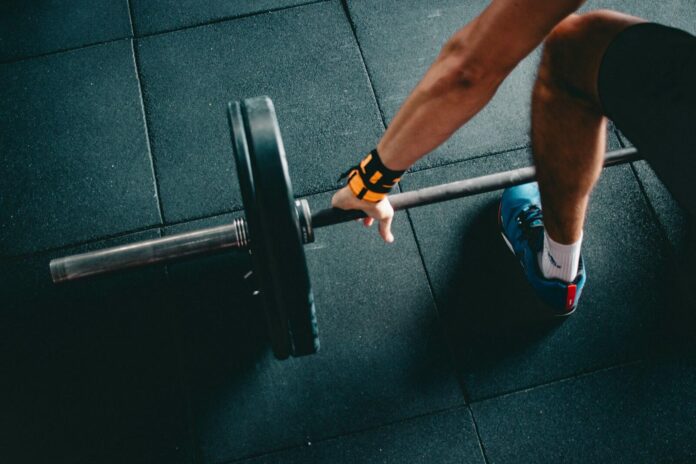

Grip strength and longevity are closely linked: in a study of nearly 140,000 adults in 17 countries, every 5 kg (11 lb) drop in grip strength came with a 16% higher risk of dying during follow-up, and grip predicted death better than systolic blood pressure. A typical man aged 35–45 squeezes about 49–51 kg on a hand dynamometer. Your handshake will not decide your lifespan, but it is a cheap, honest readout of how strong your whole body is.
Here is what the big studies found, a by-age table so you can see where you stand, three ways to test yourself without special kit, and an 8-week plan to build a stronger grip.
Key takeaways
- In the PURE study, each 5 kg lower grip was linked to 16% higher all-cause death and 17% higher cardiovascular death.
- In half a million UK Biobank adults, each 5 kg lower grip in men was linked to 16% higher all-cause death and 22% higher cardiovascular death.
- British men peak at a median of about 51 kg between ages 29 and 39, then lose strength slowly from midlife.
- Below about 27 kg counts as weak grip for a man, a red flag for sarcopenia and frailty.
- These studies are observational. Grip is a marker of overall strength, so train your whole body, not just your forearms.
What the research says about grip strength and longevity
The PURE study: 17 countries, 140,000 people
Leong and colleagues published the Prospective Urban Rural Epidemiology (PURE) study in The Lancet in 2015. They measured grip strength in 139,691 adults aged 35 to 70 across high-, middle- and low-income countries, then followed them for a median of four years.
Every 5 kg lower grip strength was linked to a 16% higher risk of death from any cause and a 17% higher risk of cardiovascular death. It was also linked to a 7% higher risk of heart attack and 9% higher risk of stroke. The links held after adjusting for age, education, employment, physical activity, smoking and alcohol.
The headline that travelled: grip strength predicted death more strongly than systolic blood pressure.
UK Biobank: half a million adults
Celis-Morales and colleagues analysed 502,293 UK Biobank participants aged 40 to 69 in the BMJ in 2018, with about seven years of follow-up. For men, each 5 kg lower grip was linked to:
- 16% higher risk of death from any cause
- 22% higher risk of cardiovascular death
- 24% higher risk of death from respiratory disease
- 10% higher risk of cancer death
Adding grip strength to a standard office risk score made that score better at predicting outcomes.
What the studies can’t tell you
Both are observational cohort studies, so they show associations, not cause and effect. Illness can weaken grip before it is diagnosed, which can make grip look more powerful than it is. The UK Biobank team also noted that its volunteers were healthier and wealthier than average.
Most important: the PURE authors said it is still unknown whether improving muscle strength lowers risk. So think of grip as a dashboard light. A weak reading tells you to check the engine, meaning your overall strength, activity, diet and health, not just to squeeze a tennis ball.
Grip strength by age: what is normal for men?
The best normative data for men come from Dodds and colleagues, who pooled 12 British studies with almost 50,000 people aged 4 to 90. Men reached a median peak of 51 kg between ages 29 and 39. After that, strength held fairly steady through midlife and then declined.
| Age | Low (10th centile) | Median (50th) | Strong (90th) |
|---|---|---|---|
| 35 | 39 kg (86 lb) | 51 kg (112 lb) | 64 kg (141 lb) |
| 40 | 38 kg (84 lb) | 50 kg (110 lb) | 63 kg (139 lb) |
| 45 | 36 kg (79 lb) | 49 kg (108 lb) | 61 kg (134 lb) |
| 50 | 35 kg (77 lb) | 48 kg (106 lb) | 60 kg (132 lb) |
| 55 | 34 kg (75 lb) | 47 kg (104 lb) | 59 kg (130 lb) |
| 60 | 33 kg (73 lb) | 45 kg (99 lb) | 56 kg (123 lb) |
| 65 | 31 kg (68 lb) | 43 kg (95 lb) | 53 kg (117 lb) |
| 70 | 29 kg (64 lb) | 39 kg (86 lb) | 49 kg (108 lb) |
| 75 | 26 kg (57 lb) | 35 kg (77 lb) | 45 kg (99 lb) |
These values use the best of several squeezes from either hand on a hand dynamometer. Notice the shape of the curve: you lose only about 4 kg from 35 to 55, then the drop speeds up. Strength you build in your 40s is strength you carry into your 60s and 70s.
What counts as a weak grip?
Dodds and colleagues defined weak grip as 2.5 standard deviations below the young adult peak. For men that is about 27 kg (60 lb). By age 80, 23% of British men fell below it.
If you are anywhere near that line before 60, talk to your doctor and start strength training.
How to test your grip strength
With a hand dynamometer (best)
Digital and spring hand dynamometers are cheap to buy, and many gyms, physiotherapists and GP surgeries have one. To get a number you can compare with the table:
- Sit in a chair with your feet flat, upper arm by your side and elbow bent at about 90 degrees.
- Squeeze as hard as you can for a few seconds.
- Do three attempts with each hand, resting briefly between them.
- Record your single best score from either hand, as the British studies did.
Without a dynamometer: three practical tests
No machine? These tests will not give you a kilogram score, and there are no validated adult norms for them. They are still useful for tracking yourself over time, because they reward the same thing: hands and forearms that can hold on under load.
| Test | How to do it | A solid first goal |
|---|---|---|
| Dead hang | Hang from a pull-up bar, arms straight, shoulders gently engaged. Time it until you drop. | 30 seconds, then 60 |
| Farmer’s carry | Hold a heavy dumbbell or kettlebell in each hand and walk tall. Record weight and distance. | Half your bodyweight in total for 30 m (about 100 ft) |
| Towel hang | Drape a towel over the bar and hang from both ends. Much harder than a normal hang. | 10–20 seconds |
The goals above are coaching benchmarks, not research norms. Use them as starting targets, retest every four weeks and chase your own improvement.
Not sure how to set up a safe hang or carry? Our free exercise library has form cues, and our strength training after 35 guide shows where carries fit in a full plan.
Can you improve grip strength after 35?
Yes. A 2019 meta-analysis in Gerontology pooled 24 trials with more than 3,000 healthy adults over 60. Exercise training produced a small but significant improvement in grip strength, with task-specific and multimodal training working well.
If adults with an average age of 73 can improve, a man of 40 can too.
Most of your gains will come from lifting heavier things with your hands. Deadlifts, rows, pull-ups and carries all train your grip whether you mean them to or not. If you cannot do a pull-up yet, our pull-up progression after 35 starts with the same dead hangs used below.
Your 8-week grip strength plan
Add this to two training days a week, at the end of the session so tired forearms do not limit your main lifts. If you already follow a full-body plan, the WHO recommendation of muscle-strengthening work on 2 or more days a week covers the rest.
| Weeks | Hang | Carry | Squeeze |
|---|---|---|---|
| 1–2 | 3 dead hangs, about 70% of your max time | 3 x 30 m farmer’s carry, moderate weight | 2 x 10 heavy gripper or towel wring |
| 3–4 | 3 dead hangs, 80% of max | 3 x 30 m, a bit heavier | 3 x 8, harder gripper |
| 5–6 | 2 dead hangs + 2 towel hangs | 4 x 30 m heavy, or 2 x 40 m | 3 x 20 s plate pinch |
| 7–8 | 3 hangs, add a few seconds a week | 4 x 30 m, heaviest you can walk tall with | 3 x 30 s plate pinch, then retest |
Tips that make the plan work
- Hold the bar, not the straps. Use lifting straps only for your heaviest sets, so your hands do most of the work.
- Use thicker handles. Wrapping a small towel around a dumbbell makes any row or carry a grip exercise.
- Train both hands. One-arm farmer’s carries (suitcase carries) also train your core.
- Eat for muscle. Strength depends on muscle, and muscle depends on protein. See our protein after 35 guide, including vegetarian sources such as paneer, tofu, lentils and Greek yoghurt.
- Consider creatine. It is one of the best-studied supplements for strength; our creatine guide covers the evidence and safety.
Why a weak grip matters: the bigger picture
Grip strength is easy to measure, so it gets the headlines. But researchers think it works as a stand-in for total muscle strength, physical activity and general health. That is why the smartest response to a low score is a full-body strength routine, regular cardio and good sleep, not a hand gripper on your desk. Grip is not the only cheap self-check either: the sitting-rising and balance tests look at your legs, balance and mobility in under a minute.
Our longevity habits guide pulls those pieces together. If you have been sedentary for years, start gently with our 12-week beginner plan for men over 40.
Safety note: See a doctor if your grip weakens noticeably over weeks or months without a clear reason, if weakness affects one hand only, or if it comes with numbness, tingling, muscle wasting or trouble with buttons and keys. These can be signs of nerve, joint or neurological problems. Build up dead hangs gradually if you have a history of shoulder or elbow pain, and stop if you feel sharp pain.
FAQ
What is a good grip strength for a 40-year-old man?
In the British normative data, the median for a 40-year-old man is about 50 kg (110 lb). About 63 kg (139 lb) or more puts you in the top 10%, and about 38 kg (84 lb) or less is in the bottom 10%.
Is grip strength really linked to how long you live?
Large studies consistently link weaker grip with higher risk of death, including cardiovascular death. They are observational, though, so grip is best seen as a marker of overall strength and health rather than a direct cause.
How can I test my grip strength at home?
A hand dynamometer gives the most accurate number. Without one, time a dead hang from a pull-up bar or track how heavy and how far you can do a farmer’s carry, and retest every few weeks.
Does grip strength decline with age?
Yes, but slowly at first. Men hold near their peak through their 30s and lose only a few kilograms by their mid-50s, after which the decline speeds up. Regular strength training can slow it.
Will squeezing a stress ball make me live longer?
There is no evidence for that. Light squeezing does little for strength, and the research does not show that training grip alone lowers death risk. Lifting heavy things with your whole body is the better bet.
Free tool: Tap your forearms on the free Muscle Map to get grip exercises and a workout, then see how strength training changes your fitness at 50, 60 and 70 with Future You.
Sources
- The Lancet news release: Leong DP, et al. Prognostic value of grip strength: findings from the Prospective Urban Rural Epidemiology (PURE) study. Lancet, 2015.
- Celis-Morales CA, et al. Associations of grip strength with cardiovascular, respiratory, and cancer outcomes and all cause mortality: prospective cohort study of half a million UK Biobank participants. BMJ, 2018.
- Dodds RM, et al. Grip strength across the life course: normative data from twelve British studies. PLoS One, 2014.
- Labott BK, et al. Effects of exercise training on handgrip strength in older adults: a meta-analytical review. Gerontology, 2019.
- World Health Organization. Physical activity recommendations for adults.
This article is for general education and is not medical advice. Check with your doctor before starting a new training or nutrition plan, especially if you have a health condition.

