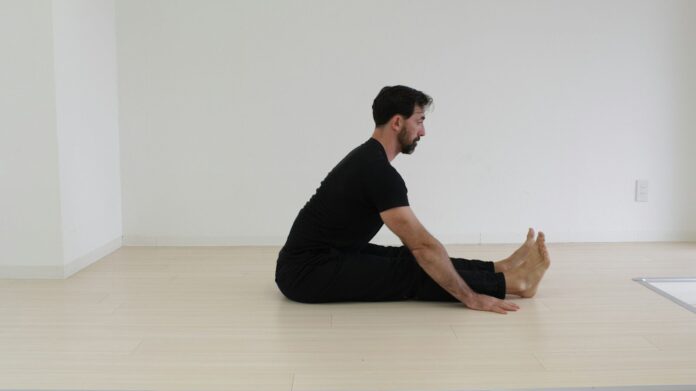

Foam rolling works, but less than the marketing says. Across 21 studies, a short roll before training improved range of motion by about 4% without hurting strength or jump height, and rolling after training cut muscle soreness by about 6%, the largest effect researchers found. Stretching has its own evidence, and most of it points the same way: use the right type at the right time, keep it brief, and stop expecting it to prevent injuries.
Key takeaways
- Foam rolling before training adds roughly 4% range of motion for about 20 minutes, with no meaningful loss of strength or power.
- Foam rolling after training is the best-supported use: soreness drops by around 6% in pooled trials, while strength and sprint recovery barely change.
- Static stretches of 60 seconds or less per muscle cost you about 1–2% of strength, which is trivial. Holds over 60 seconds cost 4–7.5%.
- Dynamic stretching is the better warm-up choice: it raises range of motion and tends to improve force, power and sprint performance.
- Neither stretching nor rolling reliably prevents injury. Stretching trims soreness by under 4 points on a 100-point scale.
- To get more flexible long term, stretch 2–3 days a week, 30–60 seconds per hold, about 60 seconds total per muscle group.
Why range of motion matters more after 35
Flexibility leaks away slowly, then faster. In a study of 436 adults aged 55 to 86, shoulder reach fell by about 5–6 degrees per decade and hip flexion by 6–7 degrees per decade. The decline accelerated after age 71 in men, and the shoulder decline started earlier in women, around 63.
The detail that matters for you: how active people were did not predict how flexible they were. General activity did not protect range of motion, so flexibility needs its own small slot in the week, and the habit you build at 35 to 50 counts.
There is a practical side too. Long days at a desk leave hips and hamstrings stiff, and that stiffness often shows up as a grumpy lower back when you lift or play. If that sounds familiar, pair this article with our 4-week plan for lower back pain from sitting and lifting.
Foam rolling: what it actually does
The best summary of the evidence is a 2019 meta-analysis in Frontiers in Physiology that pooled 21 studies and 454 participants. The authors split the research into rolling before exercise (14 studies) and rolling afterwards (7 studies). Their overall verdict was that the effects are minor and partly negligible, but potentially relevant in some cases.
Before training
Pre-rolling improved range of motion by 4.0% on average, a small but real effect. Sprint performance rose 0.7%, jump height dipped 1.9% and strength rose 1.8%: all negligible. Translation: rolling before a session will not make you weaker, and it will let you move a little further.
A 2020 clinical commentary in the Journal of Strength and Conditioning Research reports that the extra range lasts up to about 20 minutes: enough to carry you from warm-up into your first working sets. Their prescription: 1–3 sets of 30–120 seconds per muscle, each pass taking 2–4 seconds along the length of the muscle.
Pressure matters less than you would think. In the research they reviewed, rolling at 50%, 70% or 90% of maximum discomfort produced similar range-of-motion gains. Grinding until you wince buys you nothing extra.
After training
Post-rolling is where foam rolling earns its place. Perceived muscle pain fell by 6.0% in the pooled data, the largest effect in the whole review. Sprint recovery (+3.1%) and strength recovery (+3.9%) moved in the right direction but did not reach statistical significance.
One caveat: nobody can be blinded to rolling a foam cylinder down their thigh, so some of that relief is probably expectation. A full roller also tended to beat a hand-held stick for strength recovery. Think of it the way we framed cold plunges and ice baths: a tool that changes how you feel more than how fast the tissue repairs.
The surprising part: it works on the leg you did not roll
A 2023 scoping review in the European Journal of Applied Physiology looked at what happens to the untreated leg when you roll only one side. Range of motion on the other leg improved by about 5.6% on average. You cannot have smoothed out fascia in a leg you never touched, so the likely explanation is that your nervous system becomes willing to let you go further: a change in stretch tolerance, not in tissue.
So foam rolling is a tool for moving more freely in the next 20 minutes, not a way to remodel your muscles. The same review notes that regular rolling for more than four weeks does raise range of motion over time, with a large pooled effect, so consistency still pays.
Rolling plus stretching: do you need both?
A 2021 meta-analysis in the Journal of Sports Science and Medicine tested exactly this. Combining foam rolling with stretching improved range of motion compared with doing nothing, but it was no better than stretching alone and no better than rolling alone. Pick the one you will actually do. Combining them is a preference, not a requirement.
Static vs dynamic stretching: when each one earns its place
The 60-second rule for static stretching
A 2019 review in Frontiers in Physiology pulled together the acute effects of static stretching on strength and power. Stretches of 60 seconds or less per muscle group caused trivial impairments of about 1–2%. Longer holds caused declines of roughly 4–7.5%. One earlier pooled analysis found a 1.1% drop for 60 seconds or under versus 4.6% for longer holds.
Context softens even that. When static stretching sat inside a full warm-up with easy cardio, dynamic drills and sport-specific moves, 30- and 60-second holds caused no measurable loss of strength or power. Only 120-second holds did. The review’s recommendation for recreational athletes is clear: short static stretches in the warm-up are fine. Competitive athletes should be more careful right before an event, because small differences matter at that level.
Dynamic stretching before you train
Dynamic stretching means moving a joint through its range under control: leg swings, walking lunges with a reach, hip circles, arm circles, inchworms. A 2018 review in Sports Medicine found substantial evidence that it increases range of motion and, unlike long static holds, tends to improve force, power, sprint and jump performance. The gains come from warmer tissue and the muscle activation built into the movements.
One refinement: bouncy, high-speed ballistic stretching looked less helpful than controlled moves. Keep it controlled, 8–12 reps per move, and finish with a few light reps of the exercise or sport you are about to do.
Static stretching for long-term flexibility
If the goal is to touch your toes or sit deeper in a squat six months from now, static stretching done consistently is the tool. The American College of Sports Medicine position stand recommends flexibility work on at least 2–3 days a week, with daily practice giving larger gains. Hold each stretch 10–30 seconds, or 30–60 seconds for older adults, repeat 2–4 times, and aim for about 60 seconds of total stretch time per muscle group. Stretch to the point of slight discomfort or tightness, never pain.
The easiest time is after training, when muscles are warm. Cleveland Clinic suggests 30–60 second holds after exercise and short dynamic work before. If you dislike stretching, regular rolling for four-plus weeks also improves range of motion.
Does stretching prevent injury or soreness?
Here the data are humbling. A 2016 evidence review in American Family Physician summarised the trials. In a pooled analysis of 6 trials and 5,130 people, stretching before exercise did not reduce lower-limb soft-tissue injuries: the relative risk was 0.85, with a confidence interval that crossed 1.0.
Soreness is a little better, but only a little. A Cochrane review of 12 trials and 2,595 people found that stretching reduced worst-weekly soreness by 3.8 points on a 100-point scale. Bothersome soreness in any given week occurred in 25% of stretchers versus 32% of controls. Real, measurable, and probably not something you will notice.
What does lower injury risk after 35 is less glamorous: progressive strength training, gradual increases in load and a proper warm-up. If your pain lives in a tendon rather than a tight muscle, stretching harder rarely fixes it; see our guides on knee pain when running after 40 and collagen for joints and tendons.
Foam rolling vs stretching: which to use for each goal
Save this table; it is the whole article in one place.
| Your goal | Best pick | When and how much | What the evidence says |
|---|---|---|---|
| Move freely in today’s session | Dynamic stretching, plus short static holds if needed | In the warm-up after 3–5 min easy cardio; 8–12 reps per move; any static hold 30 s or less | Dynamic work raises range of motion and tends to improve power. Static holds under 60 s cost about 1–2%, nothing within a full warm-up. |
| Loosen one stiff spot (calves, quads, upper back) before lifting | Foam rolling | Warm-up; 1–2 sets of 30–60 s per muscle at moderate pressure | Range of motion up about 4% for roughly 20 minutes; strength and jump unchanged. |
| Feel less sore tomorrow | Foam rolling after training | Within a few hours; 60–120 s per worked muscle; keep the session under 10 min | Perceived soreness down about 6%, the largest foam-rolling effect found. Stretching: under 4 points out of 100. |
| Get more flexible over months | Static stretching (or regular rolling if you prefer) | 2–3+ days a week; 30–60 s holds, 2–4 reps, about 60 s total per muscle group | ACSM position stand; rolling for 4+ weeks also shows a large effect on range of motion. |
| Maximum strength, sprint or jump today | Dynamic stretching only; roll if you like | Skip any static hold over 60 s before the main sets | Holds over 60 s reduce strength and power by 4–7.5%. |
| Avoid injury | Neither, on its own | Rely on strength training, gradual load and a warm-up | Pooled trials: relative risk 0.85 for stretching, not statistically significant. |
The 10-minute routine
Two versions, because before and after are different jobs. Use version A on training days and version B 2–3 times a week, after a session or on a rest day.
Version A: before training
| Minutes | What to do | Dose |
|---|---|---|
| 0–2 | Easy cardio: march, skip, bike or brisk walk | Just enough to feel warm |
| 2–4 | Foam roll calves, then quads and hip flexors | 30 s per side, moderate pressure, 2–4 s per pass |
| 4–5.5 | Leg swings, front-to-back and side-to-side | 10 each direction, each leg |
| 5.5–7 | Walking lunge with overhead reach; hip circles | 8 lunges per side; 8 circles each way |
| 7–8.5 | Inchworm to downward dog; arm circles and trunk rotations | 5 inchworms; 10 each way |
| 8.5–10 | Two light ramp-up sets of your first exercise, or sport-specific moves | Light load, full range |
Genuinely locked-up hip flexors or chest? Add one 20–30 second static hold for that area. You are well inside the 60-second rule.
Version B: after training or on a rest day
- Foam roll, 5 minutes total: quads, hamstrings, calves, glutes and upper back, about 60 seconds each (split left and right where needed). Slow passes, breathe out as you roll.
- Static stretches, 5 minutes total: kneeling hip-flexor lunge, seated or standing hamstring stretch, wall calf stretch, doorway chest stretch and figure-four glute stretch. Hold 30 seconds per side, slight discomfort only, no bouncing.
A note for women
In the ageing study above, women lost shoulder and hip range slightly faster per decade than men, and the accelerated shoulder decline began earlier (around 63 versus 71), so the habit is at least as valuable. The reviews here found no reason to expect different rules for women. One practical tweak: if you are already very flexible, you will gain more from strength through your full range than from extra stretching. Perimenopause can come with new joint stiffness; if it is sudden or one-sided, talk to your doctor.
Safety note: Roll muscle, not joints. Cleveland Clinic advises keeping the roller off knees, ankles and elbows, starting with light pressure and slow passes, and spending no more than 1–2 minutes per muscle group with the whole session under about 10 minutes. Stretching should never hurt; ease off if you feel sharp pain, numbness or tingling. If you have a recent injury, a suspected muscle tear or a fracture, or you are pregnant, check with a doctor or physiotherapist before rolling, and skip stretching an injured area until it has been assessed.
FAQ
Is foam rolling better than stretching?
Neither is better overall. Rolling gives a quick range-of-motion boost that lasts about 20 minutes and takes the edge off soreness. Static stretching, done consistently, builds flexibility over months. A 2021 meta-analysis found that combining them adds nothing beyond either one alone, so choose by goal and preference.
How long should you foam roll each muscle?
Research protocols use 1–3 sets of 30–120 seconds per muscle, with each pass taking 2–4 seconds. Moderate pressure works as well as painful pressure. Cleveland Clinic suggests 1–2 minutes per area and under 10 minutes total.
Should I stretch before or after a workout after 35?
Before: dynamic moves, plus short static holds of 30 seconds or less for stiff spots. After: static holds of 30–60 seconds while you are warm. Static holds over 60 seconds before lifting reduce strength and power by 4–7.5%, so save the long holds for afterwards.
Does foam rolling break up fascia or knots?
Probably not. Rolling one leg improves range of motion in the other leg by about 5.6%, which points to a nervous-system change in stretch tolerance rather than any mechanical change in tissue. Rolling still helps you move more freely, just by a different route.
Can stretching prevent injuries?
Not reliably. Pooled trials of more than 5,000 people found no statistically significant reduction in lower-limb injuries from stretching before exercise. Strength training, gradual increases in training load and a proper warm-up have better support.
Free tool: Our sport warm-up routines give you ready-made dynamic sequences for running, football, padel, cricket and the gym, and the interactive muscle map shows which muscles each stretch and roll targets.
Sources
- Wiewelhove T, et al. A Meta-Analysis of the Effects of Foam Rolling on Performance and Recovery. Frontiers in Physiology, 2019.
- Behm DG, et al. Foam Rolling Prescription: A Clinical Commentary. Journal of Strength and Conditioning Research, 2020.
- Konrad A, et al. The contralateral effects of foam rolling on range of motion and muscle performance. European Journal of Applied Physiology, 2023.
- Konrad A, et al. The Accumulated Effects of Foam Rolling Combined with Stretching on Range of Motion and Physical Performance. Journal of Sports Science and Medicine, 2021.
- Chaabene H, Behm DG, Negra Y, Granacher U. Acute Effects of Static Stretching on Muscle Strength and Power. Frontiers in Physiology, 2019.
- Opplert J, Babault N. Acute Effects of Dynamic Stretching on Muscle Flexibility and Performance. Sports Medicine, 2018.
- Bosu O, et al. Stretching for Prevention of Exercise-Related Injury. American Family Physician, 2016.
- Stathokostas L, et al. Flexibility of Older Adults Aged 55–86 Years and the Influence of Physical Activity. Journal of Aging Research, 2013.
- Kravitz L. Summary of Garber CE, et al. ACSM Position Stand: Quantity and Quality of Exercise for Developing and Maintaining Fitness in Healthy Adults. Medicine & Science in Sports & Exercise, 2011.
- Cleveland Clinic. Should You Try Foam Rolling? Health Essentials, 2023.
This article is for general education and is not medical advice. Check with your doctor before starting a new training or nutrition plan, especially if you have a health condition.

