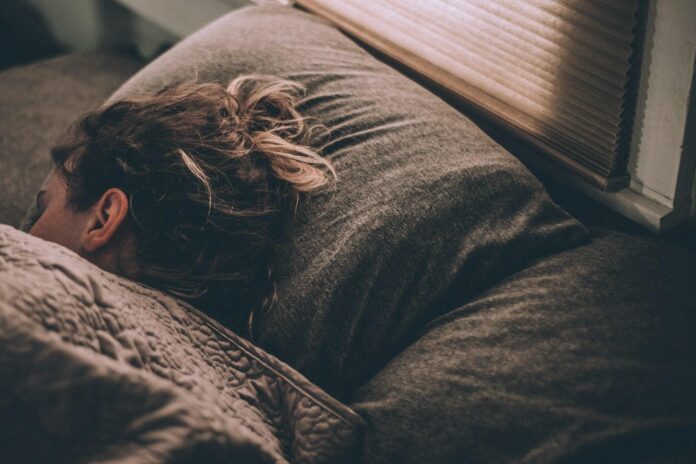

Women are about 41% more likely than men to report insomnia, according to a meta-analysis of more than 1.2 million people, and the gap grows with age. The fix for most women 35 and over is not a new gadget or supplement. It is a fixed wake time, a cool, dark bedroom, regular daytime exercise and a wind-down routine, followed for four weeks, with CBT-I if that is not enough.
Key takeaways
- Adults need at least 7 hours of sleep a night. The NHS puts the usual range at 7 to 9 hours.
- A fixed wake time, seven days a week, is the single most useful habit for steadier sleep.
- Regular exercise improves sleep quality and helps you fall asleep faster. Evening workouts are fine for most people; just finish hard sessions at least an hour before bed.
- Cut caffeine and alcohol in the 6 hours before bed, and keep the bedroom cool, dark and quiet.
- If poor sleep lasts three months or more, cognitive behavioural therapy for insomnia (CBT-I) is the recommended first treatment, ahead of sleeping pills.
Why sleep gets harder for women after 35
Sleep trouble is not just in your head, and it is not a personal failing. In a large 2006 meta-analysis in the journal Sleep, women had a risk ratio of 1.41 for insomnia compared with men. The authors also found that the female predisposition was consistent and became more pronounced with age.
For busy women in their late 30s and 40s, a few things usually stack up at once:
- Too little time in bed. Work, children, older parents and a training session all compete for the same evening hours. Sleep is often what gets squeezed.
- A mind that will not switch off. The NHS lists stress, anxiety and worry among the most common causes of insomnia.
- Night-time waking. Children, a partner who snores, a hot room or a late glass of wine can all fragment sleep.
- Hormonal shifts in the 40s. Perimenopause can bring night sweats and more waking for some women. In a survey of women aged 45 to 64 by the American Academy of Sleep Medicine (AASM), 37% reported frequent night-time waking and 35% reported night sweats or hot flashes. If this sounds like you, talk to your doctor, because there are effective options to discuss.
Poor sleep also has a cost beyond feeling tired. The AASM notes that poor sleep during and after midlife is linked with a higher risk of heart disease and stroke. Sleep is part of your health plan, not a reward for finishing everything else.
How much sleep do you actually need?
The CDC recommends that adults get at least 7 hours a day, and the NHS says most adults need 7 to 9 hours. Less than 7 hours on a regular basis counts as short sleep.
The AASM page on menopause and sleep cites US data suggesting about 30% of women do not meet the 7-hour target. If you are regularly getting 6 hours and running on coffee, you are not alone, and you are probably carrying a sleep debt that shows up as low energy, cravings and slower recovery from training.
The 2-minute sleep self-test
Answer each question for a typical week. Score 1 point for every “yes”.
| Question | Yes = 1 point |
|---|---|
| Do you usually sleep less than 7 hours? | ☐ |
| Does it take you more than 30 minutes to fall asleep on 3 or more nights? | ☐ |
| Do you wake in the night and struggle to get back to sleep on 3 or more nights? | ☐ |
| Does your wake time vary by more than an hour between weekdays and weekends? | ☐ |
| Do you have caffeine after about 2 pm? | ☐ |
| Do you drink alcohol within 3 hours of bed on 2 or more nights? | ☐ |
| Do you use your phone or laptop in bed? | ☐ |
| Do you feel sleepy or foggy most afternoons? | ☐ |
0–2 points: your sleep is in decent shape. Protect it. 3–5 points: the 4-week plan below is likely to help. 6–8 points: follow the plan, and if nothing has improved after a month, book a chat with your doctor.
This is a quick check, not a diagnosis. Loud snoring, gasping in your sleep or an urge to move your legs at night are separate issues covered later.
Your 4-week plan to sleep better
Change one layer at a time. Trying everything on night one usually lasts until Thursday.
Week 1: anchor your wake time
- Pick a wake time you can keep seven days a week, including weekends. The NHS recommends waking at the same time every day.
- Get outside in daylight within an hour of waking, even for 10 minutes. A short walk with the dog or on the school run counts.
- Only go to bed when you feel sleepy, not just because it is “bedtime”.
- Skip daytime naps this week. If you must nap, keep it short and early in the afternoon.
Week 2: set up the bedroom
- Cool: a hot room is one of the causes of insomnia the NHS lists, and the AASM advises cooling your sleeping space during menopause. Open a window, use lighter bedding or try moisture-wicking sheets.
- Dark: blackout curtains or an eye mask.
- Quiet: earplugs or a fan for steady background noise, especially if your partner snores.
- Bed is for sleep: move the laptop, the work phone and the laundry pile elsewhere.
Week 3: fix caffeine, alcohol and evening food
- The NHS advises no tea, coffee or alcohol for at least 6 hours before bed. If you sleep at 10:30 pm, your last coffee is around 4:30 pm at the latest, and earlier is better if you are sensitive.
- Alcohol can make you drowsy, but it tends to cause broken sleep later in the night. Try a few alcohol-free weeknights and notice the difference.
- Avoid a big, heavy meal right before bed. If you are hungry late, choose something light, such as yoghurt, a banana, a small bowl of oats or a slice of toast with nut butter.
Week 4: build a 30-minute wind-down
The NHS suggests relaxing for at least an hour before bed, and the AASM recommends switching off screens 30 to 60 minutes before sleep. If an hour feels impossible with children, start with 30 minutes.
- Set a “screens off” alarm.
- Do the next day’s prep: bags, lunches, a short to-do list on paper so your brain can let go.
- Take a warm shower or bath.
- Read a paper book, stretch gently or do slow breathing for 5 minutes.
- Lights out when you feel sleepy.
If you are still awake after what feels like 20 minutes, get up, go to another dim room and do something calm until you feel sleepy again. Lying in bed frustrated teaches your brain that bed is a place for worrying.
How exercise helps you sleep
Exercise is one of the best sleep tools you already have. A 2015 meta-analysis of 66 studies in the Journal of Behavioral Medicine found that regular exercise had moderate benefits for sleep quality and small-to-medium benefits for how quickly people fell asleep. Even a single session had a moderate effect on reducing time awake during the night.
You do not need extra hours. A simple week could look like this:
- Two or three short strength sessions, such as our 3-day strength plan for women over 35.
- Daily walking, ideally some of it in morning light. Our 12-week walking plan for busy women builds it up gradually.
- On packed days, a 20-minute home workout still counts.
Is it bad to work out in the evening?
For most people, no. A 2019 meta-analysis of 23 studies in Sports Medicine found that evening exercise did not harm sleep in healthy adults. The one caveat: vigorous exercise ending within about an hour of bedtime might make it harder to fall asleep. The NHS takes a more cautious line and suggests avoiding exercise in the 4 hours before bed. A sensible middle ground is to finish hard sessions at least 1 to 2 hours before sleep and keep later sessions easy, such as a walk or yoga.
Myth vs evidence
| Myth | What the evidence says |
|---|---|
| “A glass of wine helps me sleep.” | It may help you nod off, but alcohol tends to disturb sleep later in the night. The NHS advises avoiding it in the 6 hours before bed. |
| “I can catch up at the weekend.” | Long lie-ins shift your body clock and make Sunday night harder. A steady wake time works better. |
| “Evening workouts ruin sleep.” | Research in healthy adults does not support this, as long as hard sessions finish at least an hour before bed. |
| “Sleeping pills are the real fix.” | Over-the-counter sleep aids are for 1 to 2 weeks at most, says the NHS, and GPs now rarely prescribe sleeping pills. CBT-I is the recommended first treatment for chronic insomnia. |
| “Lying in bed resting is as good as sleep.” | Long stretches awake in bed can strengthen the link between bed and wakefulness. Get up if you cannot sleep. |
When it is more than bad habits
Chronic insomnia and CBT-I
The NHS defines long-term insomnia as sleep problems lasting 3 months or more. The American College of Physicians recommends that all adults with chronic insomnia receive cognitive behavioural therapy for insomnia (CBT-I) as the first treatment. CBT-I is a structured programme that retrains your sleep schedule and the thoughts that keep you awake. It is available face to face or as online programmes, and your doctor can point you to one.
Restless legs
Restless legs syndrome causes a strong urge to move your legs, usually when resting at night, often with tingling or throbbing. The NHS says it is thought to be linked to iron levels, and iron deficiency anaemia is one possible cause. If you have heavy periods, feel exhausted or eat little red meat, read our guide to iron for women and ask your doctor about a blood test before taking supplements.
Sleep apnoea
Sleep apnoea is more common in men, but the AASM notes that a woman’s risk increases with menopause. Symptoms include loud snoring, waking up gasping, morning headaches and daytime fatigue, and insomnia can be a symptom too. A neck size of 16 inches (about 41 cm) or more is one risk factor for women. If any of this fits, ask your doctor about a sleep study.
Supplements
Magnesium is popular, but the evidence is mixed. See our review of magnesium for sleep and recovery before you spend money on it, and check with your doctor or pharmacist if you take other medicines.
Safety note: See your doctor if poor sleep lasts for months, if changing your habits has not helped, or if you snore loudly, stop breathing or gasp during sleep, feel very sleepy while driving, or have low mood or anxiety that keeps you awake. Do not take over-the-counter sleep aids for more than 1 to 2 weeks without medical advice.
FAQ
Why do I wake up at 3 am every night?
Common causes include stress, alcohol in the evening, a warm bedroom, needing the toilet and, in your 40s, night sweats. Start with the 4-week plan above. If waking continues for months, or you also snore loudly or wake gasping, talk to your doctor.
How many hours of sleep does a woman over 35 need?
The same as other adults: at least 7 hours a night, with 7 to 9 hours a common healthy range. Needs vary a little from person to person, so judge by how you feel during the day.
Does perimenopause cause insomnia?
It can contribute. Hot flashes and night sweats wake some women up, and the NHS lists menopause among conditions that can cause insomnia. Good sleep habits still help, and your doctor can talk you through treatment options if symptoms are bothering you.
What is the best time to exercise for sleep?
Any time you can do it consistently. Morning or lunchtime sessions add daylight exposure. Evening sessions are fine for most people, as long as hard efforts finish at least an hour before bed.
Should I take melatonin?
Rules on melatonin differ between countries, and it is not a fix for poor sleep habits. Speak to your doctor or pharmacist before trying it, especially if you take other medicines.
Free tool: curious how a short night affects you? Try the reaction time test after a good night and after a poor one, and see where your habits could take you with Future You.
Sources
- Zhang B, Wing YK. Sex differences in insomnia: a meta-analysis. Sleep, 2006.
- CDC. FastStats: Sleep in adults.
- NHS. Insomnia.
- American Academy of Sleep Medicine. Struggling to sleep during menopause? Here’s what to know. Sleep Education, 2026.
- Kredlow MA et al. The effects of physical activity on sleep: a meta-analytic review. J Behav Med, 2015.
- Stutz J, Eiholzer R, Spengler CM. Effects of evening exercise on sleep in healthy participants: a systematic review and meta-analysis. Sports Med, 2019.
- Qaseem A et al. Management of chronic insomnia disorder in adults: a clinical practice guideline from the American College of Physicians. Ann Intern Med, 2016.
- NHS. Restless legs syndrome.
- American Academy of Sleep Medicine. Obstructive sleep apnea. Sleep Education.
This article is for general education and is not medical advice. Check with your doctor before starting a new training or nutrition plan, especially if you have a health condition.

