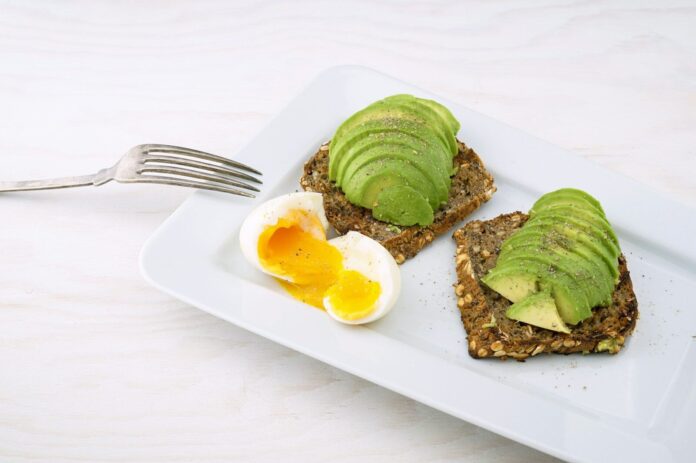

A vegetarian high-protein breakfast with 25 g or more is easy once you build it around one big protein anchor: Greek yogurt, cottage cheese, eggs, tofu, tempeh, paneer or a scoop of protein powder. Below are 20 breakfasts that each hit at least 25 g, with protein, calories and prep time worked out from USDA FoodData Central values. Most take under 10 minutes.
Why bother? In a small crossover trial, adults who ate 30 g of protein at each meal had 25% higher 24-hour muscle protein synthesis than when they ate the same daily total skewed towards dinner, with only 10 g at breakfast.
Key takeaways
- Aim for roughly 25–40 g of protein at breakfast. The ISSN suggests about 0.25 g per kg of body weight per meal, which is 20–40 g for most men.
- One anchor food (200–250 g Greek yogurt or cottage cheese, 3 eggs, 150 g firm tofu, 100–120 g paneer or tempeh) gets you most of the way.
- Add a booster such as wholemeal toast, oats, milk, hemp seeds or cheese to clear 25 g.
- Seventeen of the 20 need no protein powder, and three are fully vegan.
- Total daily protein still matters most. Breakfast is simply the meal where most vegetarians fall short.
How much protein should a vegetarian breakfast have?
The International Society of Sports Nutrition (ISSN) position stand recommends 1.4–2.0 g of protein per kg of body weight a day for people who train. It suggests spreading that across meals every three to four hours, at about 0.25 g/kg per meal, or 20–40 g in absolute terms.
For an 80 kg man, that is about 20 g as a floor and closer to 30 g if you want a buffer. Plant proteins tend to carry a little less leucine than dairy or eggs, so vegetarians and vegans have good reason to aim for the top of the range.
Keep perspective, though. A 2018 meta-analysis of 49 randomised trials found that extra protein boosted gains from resistance training, but the benefit levelled off at a total intake of around 1.6 g/kg a day. Our guide to how much protein you need after 35 covers daily targets in detail.
20 vegetarian high-protein breakfasts at a glance
Protein and calories are calculated from USDA FoodData Central (SR Legacy) values for the stated amounts. Paneer is not in that dataset, so its values come from India’s official food composition tables (IFCT 2017). Prep times are realistic estimates for one serving.
| Breakfast (main amounts) | Protein | Calories | Prep |
|---|---|---|---|
| 1. Greek yogurt berry bowl (250 g 0% Greek yogurt, 100 g blueberries, 15 g walnuts, 10 g chia, 2 tsp honey) | 30 g | 380 | 3 min |
| 2. Peanut butter banana yogurt bowl (200 g Greek yogurt, 1 tbsp peanut butter, ½ banana, 20 g oats) | 27 g | 340 | 3 min |
| 3. Cottage cheese pineapple bowl (250 g 2% cottage cheese, 100 g pineapple, 15 g almonds) | 30 g | 340 | 3 min |
| 4. Cottage cheese and tomato toast (2 slices wholemeal, 175 g cottage cheese, 1 tomato, 1 tsp olive oil) | 27 g | 370 | 5 min |
| 5. Three-egg veggie omelette (3 eggs, 20 g cheddar, spinach, mushrooms, 1 slice toast) | 30 g | 430 | 10 min |
| 6. Shakshuka with feta (3 eggs, 200 g tomatoes, onion, 30 g feta, 1 wholemeal pitta) | 32 g | 560 | 20 min |
| 7. Egg-white scramble on toast (2 eggs, 100 g egg whites, spinach, 2 slices toast) | 32 g | 410 | 8 min |
| 8. Make-ahead egg muffins (3 eggs, 60 g cottage cheese, 15 g cheddar, spinach, tomato) | 30 g | 340 | 5 min (batch 25) |
| 9. Tofu scramble on toast (150 g firm tofu, spinach, mushrooms, 1 slice toast) | 32 g | 360 | 10 min |
| 10. Protein overnight oats (50 g oats, 150 ml milk, 150 g Greek yogurt, 10 g chia, raspberries) | 29 g | 440 | 5 min, night before |
| 11. Whey protein porridge (50 g oats, 250 ml milk, 25 g whey, ½ banana) | 35 g | 460 | 5 min |
| 12. Vegan protein oats (50 g oats, 250 ml soy milk, 15 g soy protein, 15 g hemp seeds, strawberries) | 32 g | 460 | 5 min |
| 13. Banana peanut butter shake (300 ml milk, 30 g whey, 1 banana, 1 tbsp peanut butter) | 38 g | 430 | 3 min |
| 14. Cottage cheese oat pancakes (50 g oats, 2 eggs, 100 g cottage cheese, blueberries) | 30 g | 500 | 15 min |
| 15. Tempeh and avocado toast (100 g tempeh, 2 slices toast, 50 g avocado) | 29 g | 430 | 10 min |
| 16. Breakfast burrito (1 large flour tortilla, 2 eggs, 80 g black beans, 20 g cheddar, salsa) | 30 g | 550 | 10 min |
| 17. Huevos rancheros (2 corn tortillas, 2 eggs, 120 g refried beans, 30 g queso fresco, salsa, avocado) | 29 g | 510 | 15 min |
| 18. Huevos pericos with arepa (3 eggs, tomato, spring onion, 1 arepa, 30 g queso fresco) | 30 g | 540 | 15 min |
| 19. Paneer bhurji on toast (120 g paneer, onion, tomato, 2 slices toast) | 32 g | 540 | 15 min |
| 20. Besan chilla with paneer and curd (50 g chickpea flour, 50 g paneer, onion, tomato, 100 g Greek yogurt) | 31 g | 440 | 15 min |
Brands differ, so check labels. Firm tofu ranges from about 9 g to 17 g of protein per 100 g (the table uses the firmer, calcium-set type), and protein powders vary by product.
Greek yogurt and cottage cheese bowls: the 3-minute options
Strained dairy is the fastest route to 25 g. USDA data put 0% Greek yogurt at about 10 g of protein per 100 g and 2% cottage cheese at about 10.5 g, so a 250 g bowl does most of the work before you add anything.
Go sweet with berries, cinnamon and nuts, or savoury with tomato, cucumber, pepper and olive oil. Icelandic skyr and German quark can replace Greek yogurt gram for gram; check the label for protein.
Egg breakfasts that clear 25 g
A large egg (50 g) gives just over 6 g of protein, so two eggs alone land around 12–13 g. That is why the egg breakfasts above use three eggs, or pair two with cheese, beans, egg whites or toast.
Egg muffins for the week: whisk 12 eggs with 240 g cottage cheese, chopped spinach, tomato and 60 g grated cheddar. Pour into a 12-hole muffin tin and bake for about 20–25 minutes at 180°C (350°F). Three muffins make one serving and keep in the fridge for a few days.
Worried about cholesterol? The American Heart Association’s 2019 advisory concluded that healthy people can include about one whole egg a day in a heart-healthy diet, and the chair of its writing group has suggested that vegetarians who rely on eggs use more egg whites. If you eat eggs most days, rotate with dairy and tofu options. Our heart health after 35 guide covers the numbers to watch.
Tofu and tempeh: the vegan anchors
Firm, calcium-set tofu provides about 17 g of protein per 100 g in USDA data, and tempeh about 20 g. That makes 150 g of tofu or 100 g of tempeh the plant-based equivalent of three eggs.
For a tofu scramble, crumble pressed tofu into a hot pan with a little oil, turmeric, black pepper, garlic, spinach and mushrooms. For tempeh toast, pan-fry thin slices with soy sauce and smoked paprika and layer on toast with smashed avocado.
Heard that soy lowers testosterone? A 2021 meta-analysis of 41 clinical studies in men found no significant effect of soy protein or isoflavones on testosterone, free testosterone or oestrogen. For more plant-based planning, read our guide to plant-based eating for men over 35.
Protein oats and shakes for busy mornings
Plain porridge made with water gives only about 7 g of protein per 50 g of oats. Cook it in milk, then stir in Greek yogurt or protein powder off the heat, and it becomes a 30 g+ breakfast.
Overnight oats are the meal-prep winner: mix oats, milk, Greek yogurt and chia in jars the night before. For a vegan version, soy milk has more protein than most oat or almond milks; add soy or pea protein and hemp seeds.
Powder is convenient, not essential; our guide to whether you need protein powder helps you decide. If you do use one, the supplement guide explains what to look for.
Regional favourites: Latin America and South Asia
Huevos rancheros and breakfast burritos
Beans are the secret weapon. Adding 120 g of refried beans and 30 g of queso fresco to two eggs on corn tortillas brings huevos rancheros to about 29 g. A burrito with black beans and cheddar wraps up well for the commute.
Huevos pericos with arepa
The Colombian and Venezuelan classic of eggs scrambled with tomato and spring onion becomes a 30 g breakfast with three eggs and 30 g of fresh white cheese alongside the arepa.
Paneer bhurji and besan chilla
Paneer has about 19 g of protein per 100 g according to IFCT 2017, but also about 15 g of fat, so 100–120 g is a sensible portion. Scramble it with onion, tomato, chilli, turmeric and cumin, and serve with toast or roti.
Besan (chickpea flour) has about 22 g of protein per 100 g. A 50 g chilla stuffed with crumbled paneer, served with thick curd or Greek yogurt, lands at 31 g.
Strict vegetarian? Some cheeses are made with animal rennet. Look for a “suitable for vegetarians” label, or choose acid-set cheeses such as paneer.
Build your own: the anchor plus booster formula
You don’t need a recipe to hit 25 g. Pick one anchor (about 18–26 g) and add one or two boosters (about 4–8 g each). Values are from USDA FoodData Central, except paneer (IFCT 2017).
- Anchors: 200 g 0% Greek yogurt (20 g) · 200 g cottage cheese (21 g) · 3 large eggs (19 g) · 150 g firm tofu (26 g) · 100 g tempeh (20 g) · 100 g paneer (19 g) · 25 g whey powder (about 20 g)
- Boosters: 2 slices wholemeal bread (8 g) · 250 ml milk (8 g) · 250 ml soy milk (7 g) · 50 g oats (7 g) · 30 g cheddar (7 g) · 15 g hemp seeds (5 g) · 1 tbsp peanut butter (4 g)
The Protein Plate Builder does the maths if you want to mix and match.
A 7-day high-protein vegetarian breakfast plan
This rotation needs one 30-minute prep session and keeps eggs to four mornings.
- Sunday prep: bake 12 egg muffins and make 3 jars of overnight oats.
- Monday and Thursday: overnight oats (29 g)
- Tuesday and Friday: 3 egg muffins with fruit (30 g)
- Wednesday: Greek yogurt berry bowl (30 g)
- Saturday: tofu scramble or paneer bhurji (32 g)
- Sunday: shakshuka or huevos rancheros (29–32 g)
Losing fat? Choose the 340–380 kcal bowls on rest days and save burritos and pancakes for training mornings. Our guide to losing fat while keeping muscle after 35 explains why protein matters even more in a deficit.
Safety note: If you have chronic kidney disease, ask your doctor or dietitian before raising your protein intake. If you have a milk, egg, soy or peanut allergy, swap in safe anchors. If your LDL cholesterol is high or you have diabetes, discuss egg intake with your doctor. Vegetarians should also cover vitamin B12; see our B12 guide for vegetarians.
FAQ
How can a vegetarian get 30 g of protein for breakfast without protein powder?
Use a big dairy, egg or soy anchor plus a booster. A 250 g Greek yogurt bowl with walnuts and chia, three eggs with cheese and toast, or 150 g of tofu scrambled on toast all reach about 30 g.
Is it OK to eat eggs every day?
For healthy people, the American Heart Association considers about one whole egg a day compatible with a heart-healthy diet. If you eat more, use some egg whites, rotate with other anchors, and talk to your doctor if your cholesterol is high.
Does soy affect testosterone in men?
Not according to current evidence. A 2021 meta-analysis of 41 clinical studies found no significant effect of soy protein or isoflavones on testosterone or oestrogen in men.
Is Greek yogurt or cottage cheese better for protein?
They’re very close: about 10 g per 100 g for 0% Greek yogurt and 10.5 g for 2% cottage cheese in USDA data. Choose by taste and price; cottage cheese is usually saltier.
What is the best high-protein vegetarian breakfast for weight loss?
The Greek yogurt and cottage cheese bowls give about 30 g of protein for 340–380 kcal, the best ratio on this list. Egg muffins come close and can be made ahead.
Free tool: find your daily target with the Protein Calculator, then build meals that hit it with the Protein Plate Builder.
Sources
- USDA FoodData Central. Data type documentation (SR Legacy).
- Longvah T et al. Indian Food Composition Tables 2017. National Institute of Nutrition, Hyderabad.
- Jäger R et al. International Society of Sports Nutrition position stand: protein and exercise. J Int Soc Sports Nutr, 2017.
- Morton RW et al. Effect of protein supplementation on resistance training-induced gains in muscle mass and strength: systematic review, meta-analysis and meta-regression. Br J Sports Med, 2018.
- Mamerow MM et al. Dietary protein distribution positively influences 24-h muscle protein synthesis in healthy adults. J Nutr, 2014.
- Carson JAS et al. Dietary cholesterol and cardiovascular risk: a science advisory from the American Heart Association. Circulation, 2020.
- Reed KE et al. Neither soy nor isoflavone intake affects male reproductive hormones: an expanded and updated meta-analysis of clinical studies. Reprod Toxicol, 2021.
This article is for general education and is not medical advice. Check with your doctor before starting a new training or nutrition plan, especially if you have a health condition.

