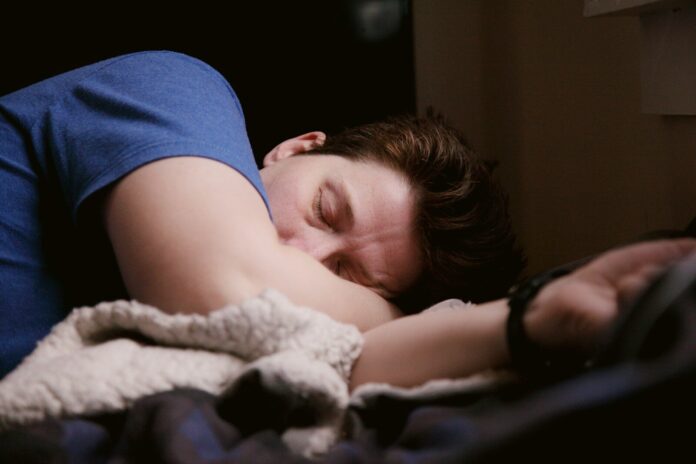

Aim for 7 to 9 hours of actual sleep a night if you want your training to turn into muscle, and treat 7 as the floor, not the goal. In a lab study, a single night without sleep cut muscle protein synthesis by 18%. In another, adults averaging 41 years old who dieted on 5.5 hours of sleep a night lost less than half as much fat as when they slept 8.5 hours, and more lean mass.
You need sleep to build muscle because sleep is when your body runs the repair job your workout ordered. Here is what the research actually shows, how much is enough, and what to do after a bad night.
Key takeaways
- Sleep medicine experts recommend at least 7 hours a night for adults. For muscle, 7–9 hours of real sleep (not time in bed) is a sensible target.
- One night of total sleep loss lowered muscle protein synthesis by 18%, raised cortisol by 21% and lowered testosterone by 24% in young adults.
- Five nights of 4 hours in bed lowered muscle-building rates, but three interval sessions during that week kept them at normal levels.
- Dieting on short sleep shifts weight loss away from fat and towards lean mass: 0.6 kg vs 1.4 kg of fat lost in one two-week trial.
- Most of this research is short and done in young people, so the direction is clear but the exact long-term cost is not.
How much sleep to build muscle?
The American Academy of Sleep Medicine and the Sleep Research Society reviewed the evidence and concluded that adults should sleep 7 or more hours a night on a regular basis. Their panel called 6 hours or less inadequate to sustain health and safety. They set no upper limit and noted that more than 9 hours may suit people repaying sleep debt or recovering from illness.
No study has pinned down a “muscle-building dose” of sleep. But every experiment that cut sleep below roughly 5–6 hours found something that works against muscle: lower protein synthesis, a worse hormone profile, weaker performance or more lean mass lost on a diet.
So the practical answer for a man training 3–4 hours a week is 7–9 hours of sleep, which usually means 7.5–9 hours in bed, because nobody sleeps the whole time they are lying there. Consistency matters as much as the total. Five good nights and two wrecked ones is not the same as seven decent nights.
What short sleep does to your muscles: the studies
Muscle grows when muscle protein synthesis outpaces breakdown over weeks and months. Training is the signal, protein is the raw material, and sleep appears to be part of the machinery that converts one into the other.
One sleepless night: 18% less muscle protein synthesis
In a 2021 crossover study by Lamon and colleagues, 13 healthy young adults spent one night fully awake and, on another occasion, slept normally. After the sleepless night, muscle protein synthesis was 18% lower. Cortisol, a stress hormone that favours breakdown, rose 21%, and testosterone fell 24%.
The authors were candid about the limits: a small sample, participants around 20 years old, and a control night slept at home rather than in the lab. It shows a mechanism, not what happens across a training block.
Five short nights: exercise softens the blow
Saner and colleagues (2020) put 24 young men through five nights of either 8 hours in bed, 4 hours in bed, or 4 hours in bed plus three sessions of high-intensity interval exercise. The 4-hour group’s myofibrillar protein synthesis (the rate of building new contractile muscle protein) fell to 1.24% a day, versus 1.53% a day with normal sleep, roughly a fifth lower.
The interesting part: the group that slept 4 hours but also exercised kept protein synthesis at normal levels. Training does not cancel out sleep loss, but it helps protect your muscle during a rough week. That is a good argument for not skipping your session just because the baby was up all night. Our plan for how to stay fit as a busy dad shows how to keep short sessions going through those weeks.
A week of 5-hour nights: lower testosterone
In a University of Chicago study published in JAMA in 2011, 10 healthy young men spent a week sleeping under 5 hours a night. Their daytime testosterone dropped by 10–15%. For comparison, testosterone normally declines about 1–2% a year with age. More on that in our guide to testosterone after 35.
Dieting on short sleep: more muscle lost, less fat
This is the study most relevant to men over 35. Nedeltcheva and colleagues (2010) had 10 overweight adults, average age 41, follow the same moderate calorie deficit for 14 days twice: once with 8.5 hours in bed and once with 5.5 hours.
With 8.5 hours they lost 1.4 kg (3.1 lb) of fat and 1.5 kg (3.3 lb) of fat-free mass. With 5.5 hours they lost only 0.6 kg (1.3 lb) of fat and 2.4 kg (5.3 lb) of fat-free mass, and they were hungrier. Same diet, very different result. If you are trying to lose fat and keep muscle after 35, sleep belongs in the plan.
Performance: about 0.4% worse for every extra hour awake
A 2022 meta-analysis in Sports Medicine pooled 69 studies and found that acute sleep loss reduced physical performance by an average of 7.6%. Strength, power, endurance and skill all suffered. Performance dropped by about 0.4% for each extra hour awake before exercise, and afternoon and evening sessions were hit harder than morning ones.
Weaker sessions matter for muscle too. If you lift less weight for fewer reps, you give your muscles a smaller reason to grow.
How strong is this evidence?
Honestly: good on direction, thin on long-term numbers. The studies are small, mostly short, and mostly in young men. Nobody has run a year-long trial comparing muscle gain on 6 vs 8 hours of sleep. But the findings all point the same way, and none suggests short sleep is harmless for lifters.
After a bad night: should you still train?
Usually, yes, with adjustments. The table below turns the research into decisions. The “what to expect” column comes from the studies above; the training call is practical coaching advice, not a rule from any one study.
| Sleep last night | What to expect | Training call |
|---|---|---|
| 7–9 hours | Normal recovery and performance | Train as planned. Push for progress. |
| 6–7 hours, one night | Little or no noticeable drop for most people | Train as planned. Skip the max-effort attempt if you feel flat. |
| 4–6 hours, one night | Weaker, especially later in the day | Train earlier if you can. Keep the weights, cut 1–2 sets, stop 2–3 reps short of failure. |
| Almost none | Clear drop in strength and focus; worse protein synthesis | Swap for a walk, easy cycling or mobility. Do not drive tired to the gym. |
| Several short nights in a row | Lower muscle-building rates and testosterone | Keep short sessions going (exercise helped protect muscle in the Saner study), but fix the sleep problem first. |
Are you short on sleep? A 2-minute self-check
Many men think they function fine on 6 hours. Answer yes or no to each of these for the past two weeks:
- Do you need an alarm to wake up on most workdays?
- Do you sleep 1.5 hours or more longer on days off?
- Do you feel drowsy in meetings, on the sofa or while driving?
- Do you rely on caffeine to get through the afternoon?
- Have your lifts stalled or felt heavier for no obvious reason?
- Do you fall asleep within a few minutes of your head hitting the pillow?
0–1 yes: you are probably sleeping enough. 2–3 yes: you are likely running a sleep debt, so add 30–45 minutes in bed for two weeks and see how you feel. 4 or more: sleep is probably your biggest limit on progress right now. This is a rough guide, not a diagnosis, and it cannot rule out a sleep disorder.
A 7-step plan to get more muscle out of your sleep
1. Set your wake time, then count back
Your wake time is usually fixed by work and kids, so build from it. Count back 8 to 8.5 hours to find your lights-out time, and keep it within about an hour on weekends. Our free sleep calculator does the maths and gives you a caffeine cut-off too.
2. Stop caffeine 6 or more hours before bed
In a sleep-lab study, 400 mg of caffeine (roughly four cups of brewed coffee) taken 6 hours before bed cut total sleep by more than an hour. Participants did not notice. If bed is at 22:30, your last coffee is 16:30 at the latest; earlier is better. Our guide to how much coffee is too much after 35 explains why many people do better with a longer gap.
3. Keep training, even in a rough week
The Saner study suggests exercise protects muscle-building rates when sleep is short. A 30-minute session beats a skipped one. Just lower the intensity as the table above suggests.
4. Hit your daily protein, and consider a pre-bed serving
In a 12-week trial, 44 young men who had 27.5 g of protein (plus 15 g of carbohydrate) every night before bed gained more strength and more quadriceps size than men given a calorie-free placebo. A 2021 systematic review of 9 studies found possible benefits in young men but warned that the protein groups often simply ate more protein overall.
So total daily protein comes first. If you are short, a pre-bed snack is an easy way to close the gap: 250 g of Greek yoghurt or skyr, 200 g of cottage cheese, a glass of milk with a handful of nuts, paneer, or a soy milk shake for a vegan option. See how much you need in our guide to protein after 35.
5. Do not diet hard on short sleep
The Nedeltcheva trial shows why. If a newborn, travel or a work crunch is wrecking your sleep, hold your calories near maintenance for that stretch and resume the deficit when sleep recovers.
6. Use naps as a top-up, not a fix
A short early-afternoon nap can make you feel and perform better after a poor night. Research on naps and muscle is still limited, so treat them as a patch, not a replacement for night-time sleep.
7. Protect the basics
A dark, cool, quiet bedroom, screens out of bed and a regular schedule are the dull habits that work. Our guide to sleeping better after 35 covers alcohol, late meals and night-time waking in detail.
Safety note: Loud snoring, pauses in breathing, choking or gasping at night, waking often to urinate and heavy daytime tiredness can be signs of obstructive sleep apnoea, which is common in men and very treatable. Talk to your doctor if these sound familiar, or if poor sleep has lasted months despite good habits. Never drive when you are struggling to stay awake.
FAQ
Can you build muscle on 6 hours of sleep?
Yes, you can still make progress, especially as a beginner. But sleep experts consider 6 hours or less inadequate for adults, and every lab study that cut sleep found something working against muscle. You will likely build muscle more slowly and recover worse than on 7–9 hours.
Do muscles grow while you sleep?
Muscle repair and growth happen around the clock, not only at night. Sleep supports the process: in studies, cutting sleep lowered muscle protein synthesis and testosterone and raised cortisol. Think of sleep as part of the system rather than the only time growth happens.
Is 7 hours of sleep enough to build muscle?
Seven hours of actual sleep meets the minimum that sleep medicine bodies recommend for adults, and many people do well on it. If you train hard, are dieting or still feel tired, aim for 8. Remember that 7 hours in bed often means only about 6.5 hours asleep.
Does one bad night ruin your gains?
No. One night of total sleep loss lowered protein synthesis in a lab, but muscle is built over weeks. What hurts is a pattern of short nights. Train sensibly the next day and get to bed earlier that night.
Is it better to sleep in or get up early to work out?
If getting up early means sleeping under 6 hours, the extra sleep is usually the better deal, because short sleep lowers performance and recovery. The best fix is an earlier bedtime so you get both. If that is not possible, a shorter session at lunch or in the evening still counts.
Free tool: find your ideal bedtime and caffeine cut-off with the sleep calculator, and check whether sleep is behind your low energy with the 3-minute energy check.
Sources
- Lamon S et al. The effect of acute sleep deprivation on skeletal muscle protein synthesis and the hormonal environment. Physiol Rep, 2021.
- Saner NJ et al. The effect of sleep restriction, with or without high-intensity interval exercise, on myofibrillar protein synthesis in healthy young men. J Physiol, 2020.
- Nedeltcheva AV et al. Insufficient sleep undermines dietary efforts to reduce adiposity. Ann Intern Med, 2010.
- Leproult R, Van Cauter E. Effect of 1 week of sleep restriction on testosterone levels in young healthy men. JAMA, 2011.
- Craven J et al. Effects of acute sleep loss on physical performance: a systematic and meta-analytical review. Sports Med, 2022.
- Watson NF et al. Recommended amount of sleep for a healthy adult: a joint consensus statement of the AASM and Sleep Research Society. J Clin Sleep Med, 2015.
- Snijders T et al. Protein ingestion before sleep increases muscle mass and strength gains during prolonged resistance-type exercise training in healthy young men. J Nutr, 2015.
- Reis CEG et al. Effects of pre-sleep protein consumption on muscle-related outcomes: a systematic review. J Sci Med Sport, 2021.
- American Academy of Sleep Medicine. Late afternoon and early evening caffeine can disrupt sleep at night (Drake C et al., J Clin Sleep Med, 2013).
- HSE (Ireland). Obstructive sleep apnoea.
This article is for general education and is not medical advice. Check with your doctor before starting a new training or nutrition plan, especially if you have a health condition.

